At 2 AM, your parent falls. Or they have a seizure. Or they stop responding. You call 911 and suddenly you are following an ambulance to the ER with no wallet, no insurance cards, no medication list, and no change of clothes. You will spend the next 8-14 hours in a hospital waiting room wishing you had prepared for this moment. Because this moment was always coming. Every caregiver for a person with dementia will eventually make an emergency trip to the hospital — most will make several. A go-bag packed and ready by the door turns a panicked scramble into a grab-and-go.
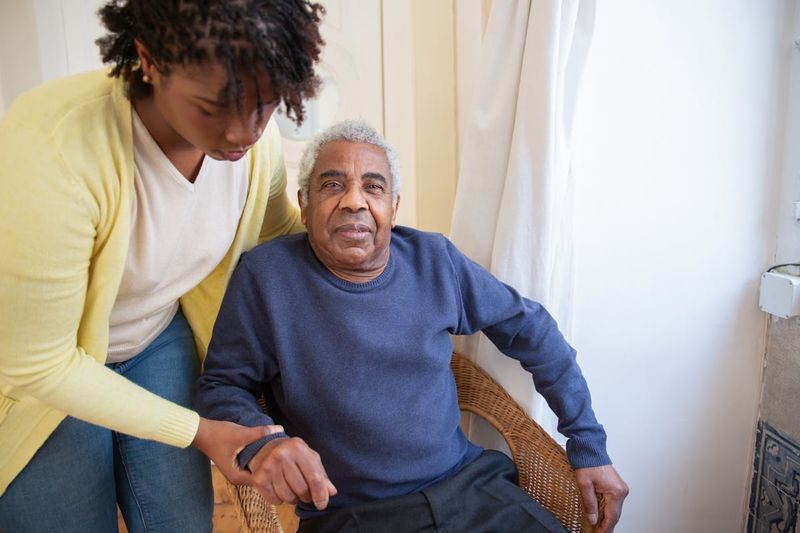
Photo by Jason Leung on Unsplash
This guide covers exactly what to pack, why each item matters, and the best products for building a caregiver emergency kit that is ready when you need it — tonight, next week, or six months from now.
Hospital visits with a dementia patient are uniquely challenging for reasons that do not apply to other patients:
They cannot advocate for themselves. They may not be able to tell the ER staff their name, what happened, what medications they take, or where it hurts. You are their memory, their medical history, and their voice.
They may become extremely agitated in an unfamiliar, noisy, bright environment full of strangers. A comfort item from home can be the difference between manageable anxiety and a full behavioral crisis.
Hospital stays are longer than you expect. An ER visit that you think will take 2 hours takes 8. An admission you think will last one night lasts four. You need to be prepared for extended waits.
Their regular routine is completely disrupted. Meals, medications, toileting schedules, bedtime rituals — everything that keeps them stable at home disappears in a hospital setting.
The Complete Go-Bag Checklist
Critical Documents (Pack First, Update Regularly)
These documents will be requested within the first 30 minutes of any ER visit. Having them ready saves time and prevents miscommunication that can affect treatment:
Current medication list — every medication, dose, frequency, and prescribing doctor. Update this every time a medication changes. Print multiple copies.
Insurance cards — copies of all insurance cards (Medicare, supplemental, prescription coverage). Keep originals at home and copies in the bag.
Photo ID — copy of their driver’s license or state ID.
Advance directive / living will — the original or a notarized copy. This tells the hospital what level of intervention the person wants. Without it, the hospital will do everything, which may not be what your parent wanted.
Healthcare power of attorney / proxy — the document that authorizes you to make medical decisions. Without it, you may be sidelined from treatment decisions during a crisis.
DNR order (if applicable) — if a Do Not Resuscitate order exists, bring the original. EMTs and ER staff need to see it immediately.
Brief medical summary — one page with diagnosis, date of diagnosis, current stage, allergies, recent hospitalizations, and primary care doctor’s name and number.
Emergency contacts list — family members, primary care doctor, specialist, home health aide, pharmacy.
Keep all documents in a waterproof document organizer. A zip-lock bag works, but a proper organizer keeps everything sorted and accessible under stress.
Change of clothes — a complete outfit including underwear, socks, and shoes. Hospital stays often involve clothing removal, and you do not want them discharged in a hospital gown.
Incontinence supplies — 3-4 pull-ups or briefs, wipes, barrier cream, and a disposal bag. Hospitals stock these but rarely have the right size or brand immediately available.
Comfort item — their companion pet, therapy doll, or favorite blanket. This is not optional for dementia patients. A familiar comfort item can prevent hours of agitation in an unfamiliar environment.
Familiar pillow or pillowcase — a pillow that smells like home provides comfort and sensory familiarity. A pillowcase from their bed works if a full pillow is too bulky.
Glasses, hearing aids, dentures — and cases for each. These items get lost in hospitals constantly. Label everything with their name.
Non-slip socks or slippers — hospital floors are slippery, and hospital-issue socks are terrible. Bring their own non-slip footwear.
Snacks — hospital meals are on the hospital’s schedule, not yours. Pack easy-to-eat snacks: crackers, applesauce pouches, protein bars. Nothing that requires refrigeration.
For the Caregiver
Phone charger (long cable) — hospital outlets are always in awkward locations. A 10-foot cable gives you reach. Pack a portable battery bank as backup.
Snacks and water bottle — you will be there for hours. Hospital cafeterias close at night. Pack protein bars, nuts, dried fruit, and a refillable water bottle.
Cash — $20-$40 for vending machines and parking. Many hospital parking garages are cash-only.
Notebook and pen — write down what every doctor says, what tests are ordered, and what medications are given. You will not remember it accurately later, and you need accurate records.
Change of clothes — if you are following an ambulance at 2 AM in your pajamas, you will want real clothes eventually.
Earbuds or headphones — ERs are loud. You need to be able to rest while waiting.
Small blanket or jacket — hospitals are cold, especially at night.
Reading material or entertainment — you will wait. A lot. A loaded Kindle, a book, or downloaded podcasts help.
Best Products for Your Go-Bag
The Bag Itself
Choose a duffel bag or backpack that is large enough to hold everything but small enough to sit on the floor of an ER room without being in the way. A bag with multiple compartments helps keep documents, patient items, and caregiver items separated. Waterproof or water-resistant material protects contents from spills and rain.
A 40-50 liter duffel or a medium hiking daypack works well. Label it clearly: “HOSPITAL GO-BAG” and your phone number. Put it by the front door or in the car trunk where you can grab it without thinking.
A fireproof, waterproof document bag with labeled file sections keeps everything organized and findable under stress. Look for one with multiple accordion-style sections so you can separate medical documents, insurance cards, legal documents, and personal papers. The bag should close securely and be clearly labeled.
Your phone is your lifeline during a hospital stay: calling family, looking up medical information, accessing insurance portals, and receiving updates from doctors. A dead phone in a hospital emergency is genuinely dangerous. Pack a portable battery bank with at least 10,000 mAh capacity (enough for 2-3 full phone charges) and a 10-foot charging cable.
Pack their primary comfort item (companion pet, therapy doll, fidget blanket) plus a backup. Also include a familiar pillowcase or small throw blanket from home. The smell and texture of familiar items can be remarkably calming in the alien environment of a hospital room.
Label the comfort item with their name and “PERSONAL ITEM – DO NOT DISCARD.” Hospital cleaning staff will throw away items that look like they do not belong.
Medical Information Card
In addition to the full document packet, create a laminated wallet card with the most critical information: name, date of birth, diagnosis, allergies, current medications, emergency contact, and healthcare proxy. This card goes in your pocket, not the bag, so it is always on your person even if the bag is in the car.
A go-bag is only useful if it is current. Set a monthly reminder to:
Update the medication list — any changes since last month need to be reflected
Check expiration dates on snacks and batteries
Replace used items after any hospital visit
Update insurance cards if coverage changed
Rotate clothing seasonally (do not pack summer clothes in January)
Charge the portable battery bank — lithium batteries lose charge over months of sitting
Verify legal documents are still current and reflect the person’s wishes
What to Do When You Get to the ER
Having the bag is step one. Using it effectively is step two:
Hand the medication list and medical summary to the triage nurse immediately. Do not wait to be asked. This information directly affects treatment decisions.
Present the healthcare POA/proxy document to the registration desk. Establish your authority to make decisions early, before it becomes urgent.
Get the comfort item to your parent as soon as possible. The ER is terrifying for someone with dementia. Their familiar item is an anchor.
Start the notebook. Write down the time of arrival, who you spoke to, what they said, and what was ordered. This record is invaluable for follow-up care.
Tell every staff member: “This person has dementia.” Say it to the triage nurse, the ER doctor, the admitting nurse, and anyone who enters the room. Do not assume it is in the chart or that they have read it. Communication gaps are constant in hospitals.
Ask for a quiet room if one is available. Many ERs have low-stimulation rooms for psychiatric patients that also work well for disoriented dementia patients.
Go-Bag Packing Checklist (Print This Out)
Category
Item
Packed?
Documents
Medication list (3 copies)
Documents
Insurance cards (copies)
Documents
Photo ID (copy)
Documents
Advance directive / living will
Documents
Healthcare POA
Documents
DNR (if applicable)
Documents
Medical summary (1 page)
Documents
Emergency contacts list
Patient
Change of clothes + underwear + socks
Patient
Incontinence supplies (3-4 briefs, wipes, cream)
Patient
Comfort item (companion pet, doll, blanket)
Patient
Familiar pillow or pillowcase
Patient
Glasses, hearing aids, dentures + cases
Patient
Non-slip socks or slippers
Patient
Snacks
Caregiver
Phone charger + 10-foot cable
Caregiver
Portable battery bank
Caregiver
Snacks + water bottle
Caregiver
Cash ($20-$40)
Caregiver
Notebook + pen
Caregiver
Change of clothes
Caregiver
Earbuds or headphones
Caregiver
Small blanket or jacket
Caregiver
Book/Kindle/entertainment
On Person
Laminated medical info wallet card
The Bottom Line
The emergency trip to the hospital will happen. It is not a matter of if but when. The difference between a caregiver who is prepared and one who is not is the difference between a stressful but manageable situation and an hours-long crisis compounded by missing documents, no supplies, and unnecessary panic.
Pack the bag this weekend. Put it by the front door. Check it monthly. And when that 2 AM call comes, grab it and go. Everything you need is inside, your parent’s medical records are in order, their comfort item is packed, and you have snacks and a phone charger. You cannot control the disease, but you can control your readiness for its worst moments.
Affiliate disclosure: Some links in this article are affiliate links. If you make a purchase through these links, we may earn a small commission at no extra cost to you. This helps support our work creating free resources for families dealing with cognitive decline.
Photo by Dmitriy Roshchupkin on Pexels (Free to use)
You Don’t Have to Figure This Out Alone
When a family member is diagnosed with cognitive decline or dementia, the immediate feeling is often overwhelming isolation. You’re suddenly dealing with medical decisions, legal questions, financial concerns, and emotional upheaval — all at once, and usually without any prior experience managing any of it.
The good news, if you can call it that, is that millions of families have walked this path before you, and the infrastructure of support that exists today — while imperfect — is far more substantial than most people realize. The problem isn’t usually that resources don’t exist. It’s that nobody hands you a map when you need one.
This is that map. It won’t cover everything, but it will cover the things that matter most, organized by category so you can go directly to what you need right now.
National Organizations That Provide Free Help
Alzheimer’s Association (alz.org)
This is the first call most families should make: 1-800-272-3900 (24/7 helpline, available in over 200 languages). They provide:
Free care consultation with trained staff who can help you handle your specific situation
Local chapter connections for in-person support groups
Educational programs for caregivers (many available online)
A community resource finder that locates services near you
MedicAlert + Safe Return program for wandering (critical if your family member is at risk)
Eldercare Locator (eldercare.acl.gov)
Call 1-800-677-1116 (Monday-Friday, 9 AM – 8 PM ET). This is a public service of the U.S. Administration on Aging. They connect you with your local Area Agency on Aging, which is the gateway to most community-based services including:
Meals on Wheels and home-delivered nutrition programs
Transportation services for medical appointments
In-home aide services (sometimes subsidized based on income)
Respite care programs
Caregiver support services
Family Caregiver Alliance (caregiver.org)
Particularly strong on caregiver-specific resources. Their Family Care Navigator tool helps you find services state by state. They also offer:
Online support groups
Fact sheets and guides on specific caregiving topics
Legal and financial planning resources
Webinars and educational programs
National Institute on Aging (nia.nih.gov)
The best source for current, evidence-based medical information about cognitive decline and dementia. Their Alzheimer’s and related Dementias Education and Referral Center (ADEAR) can be reached at 1-800-438-4380.
Support Groups: Finding People Who Understand
Support groups aren’t for everyone, but for many caregivers, they’re the single most important resource they discover. There’s something about sitting in a room (or logging into a video call) with people who are living the same reality that no amount of reading can replicate.
In-Person Groups
Alzheimer’s Association support groups — available nationwide, free, facilitated by trained leaders. Search at alz.org/help-support/community/support-groups
Area Agency on Aging groups — many local agencies run their own caregiver support groups. Call the Eldercare Locator (1-800-677-1116) to find yours.
Hospital and health system groups — many major medical centers run free dementia caregiver groups. Ask your loved one’s neurologist or primary care doctor for referrals.
Faith-based groups — some churches, synagogues, and mosques offer caregiver support groups. These can be especially helpful if spiritual support is important to you.
Online Groups
ALZConnected (alzconnected.org) — the Alzheimer’s Association’s online community. Message boards, chat groups, and caregiver forums available 24/7.
AgingCare.com forums — large, active community of family caregivers. The forums cover everything from medical questions to venting about hard days.
Reddit r/dementia and r/CaregiverSupport — surprisingly good communities with active, supportive members. Helpful for middle-of-the-night moments when you need to talk to someone who gets it.
Respite Care: Getting a Break Without Guilt
Respite care provides temporary relief for primary caregivers. It comes in several forms, and using it is not a sign of failure — it’s a strategy for sustainability.
Types of Respite Care
In-home respite: A trained caregiver comes to your home for a few hours (or longer) so you can leave. This can be arranged through home care agencies, your local Area Agency on Aging, or volunteer organizations like the National Respite Network.
Adult day programs: Structured daytime programs that provide socialization, activities, meals, and supervision. Many operate Monday through Friday, roughly 7 AM to 6 PM. Costs vary ($50-$150/day depending on location), and some programs offer sliding-scale fees. Beyond the respite benefit for caregivers, many people with mild to moderate cognitive decline genuinely enjoy adult day programs — the social interaction and structured activities can be beneficial.
Short-term residential respite: Some assisted living and memory care facilities offer short-term stays (a weekend, a week, sometimes longer) specifically designed to give caregivers a break. This is also a useful way to trial a facility before committing to a permanent placement.
Paying for Respite Care
Medicaid waiver programs — many states offer Home and Community-Based Services (HCBS) waivers that include respite care. Eligibility varies by state.
Veterans’ benefits — if the person with cognitive decline is a veteran (or the spouse of a veteran), VA caregiver support programs may cover respite care.
ARCH National Respite Network (archrespite.org) — helps families find and fund respite care. Their Respite Locator tool is particularly useful.
Some long-term care insurance policies cover respite care — check your policy carefully.
Legal Planning: The Things You Must Do While You Still Can
Legal planning is one of the most important — and most often delayed — tasks for families dealing with cognitive decline. The critical point: most legal documents require that the person signing them has “legal capacity,” meaning they understand what they’re signing. Once cognitive decline progresses past a certain point, it may be too late to execute these documents without a court proceeding (guardianship/conservatorship), which is expensive, time-consuming, and emotionally difficult.
Essential Legal Documents
Durable Power of Attorney (Financial): Designates someone to manage finances when the person can no longer do so. “Durable” means it remains in effect even after the person loses capacity. Without this, you may need a court-appointed conservator to pay your parent’s bills — a process that can take months and cost thousands.
Healthcare Power of Attorney / Healthcare Proxy: Designates someone to make medical decisions when the person can no longer make them. This is the person who will talk to doctors, approve or decline treatments, and make end-of-life decisions based on the patient’s wishes.
Living Will / Advance Directive: Documents the person’s wishes regarding medical treatment, including resuscitation, life support, feeding tubes, and other interventions. Having this in writing prevents agonizing family disagreements later.
HIPAA Authorization: Allows designated family members to receive medical information. Without this, doctors may not be able to discuss the patient’s condition with you, even if you’re the primary caregiver.
Finding Legal Help
National Academy of Elder Law Attorneys (naela.org) — searchable directory of attorneys who specialize in elder law
Legal Aid — many communities offer free or low-cost legal services for seniors. Your Area Agency on Aging can help you find these.
Alzheimer’s Association — offers free legal and financial planning resources, including a Legal and Financial Planning Fact Sheet
Financial Resources and Benefits
Government Programs
Medicare: Covers doctor visits, hospital stays, and some home health care. Does NOT cover long-term custodial care (the kind most people with dementia eventually need). Does cover hospice care, which becomes relevant in later stages.
Medicaid: Covers long-term care, including nursing home and some home-based care, for people who meet income and asset requirements. Eligibility rules are complex and vary by state. A Medicaid planning attorney can help you understand your options without improperly spending down assets.
Veterans’ Aid and Attendance: A VA benefit for veterans (and surviving spouses) who need help with daily activities. Can provide up to $2,000+ per month for care needs. Underutilized because many families don’t know it exists. Contact your local VA office or a Veterans Service Organization (VFW, American Legion, DAV) for help applying.
Social Security Disability Insurance (SSDI): If the person with cognitive decline is under 65 and can no longer work, they may qualify for SSDI. Early-onset Alzheimer’s is on the Social Security Administration’s Compassionate Allowances list, which can speed up the approval process.
Tax Benefits for Caregivers
Medical expense deduction (if total medical expenses exceed 7.5% of adjusted gross income)
Dependent care credit (if the person qualifies as your dependent)
State-specific caregiver tax credits (available in some states — check your state’s tax website)
Keep meticulous records. Save every receipt, every bill, every statement. A caregiver organizer and planner can help you keep medical records, financial documents, and care logs in one place — especially useful during tax season and when coordinating with multiple providers.
Home Safety Products That Make a Real Difference
Modifying the home environment is one of the most impactful things you can do, especially during the mild-to-moderate stages. A few targeted purchases can prevent falls, reduce confusion, and give you some peace of mind.
Lockable medicine cabinets for all medications that aren’t in the dispenser
Kitchen safety:
Stove knob covers or an automatic stove shut-off device
Removal of sharp knives and other dangerous items
Locking cabinets for cleaning products and chemicals
Books That Families Consistently Recommend
There are hundreds of books about dementia caregiving. These are the ones that families most often describe as genuinely helpful:
“The 36-Hour Day” by Nancy Mace and Peter Rabins — the definitive guide to dementia caregiving. Covers every stage, every practical challenge, and every emotional reality. If you read one book, make it this one.
This is the decision that families agonize over more than any other, so let’s address it directly.
Consider memory care when:
The person requires more supervision than you can safely provide (especially overnight)
Wandering has become a safety risk that home modifications can’t adequately address
Behavioral symptoms (aggression, severe agitation) are putting someone at risk of harm
The physical demands of care (lifting, transferring, managing incontinence) are beyond what you can do safely
Your own health is deteriorating because of the caregiving demands
The person needs skilled nursing care that a home setting can’t provide
Choosing memory care is not giving up. It’s recognizing that the disease has progressed to a point where professional care is what your family member needs — and what you need. Many families report that their relationship with the person improved after placement, because they could be a loving family member again instead of an exhausted caregiver.
Crisis Resources
Keep these numbers accessible. You may need them at 2 AM on a Tuesday, and that’s not the time to be searching.
Alzheimer’s Association 24/7 Helpline: 1-800-272-3900
Eldercare Locator: 1-800-677-1116
988 Suicide and Crisis Lifeline: Call or text 988 (for caregivers in crisis)
National Domestic Violence Hotline: 1-800-799-7233 (elder abuse situations)
Adult Protective Services: Contact through your local Department of Social Services
911: For any immediate safety emergency
One More Thing
If you’ve read this far, you’re doing something important: you’re looking for help. That itself takes strength, because it means admitting you can’t do everything yourself.
You don’t have to do everything on this list. You don’t have to do it all today. Pick the one thing that feels most urgent right now, and do that one thing. Then come back for the next one.
This is a long road, and you don’t have to walk it alone. There are people and organizations ready to help. Let them.
Medical disclaimer: This article is for informational purposes only and does not constitute medical, legal, or financial advice. The resources listed were current at the time of publication but may change. Always verify information directly with the organizations mentioned. For medical concerns, consult a qualified healthcare provider. For legal and financial planning, consult licensed professionals in your state. Every family’s situation is unique, and professional guidance tailored to your specific circumstances is always recommended.
Affiliate disclosure: Some links in this article are affiliate links. If you make a purchase through these links, we may earn a small commission at no extra cost to you. This helps support our work creating free resources for families dealing with cognitive decline.
Photo by RDNE Stock project on Pexels
Nobody Tells You What It’s Actually Like
Photo by Jsme MILA on Pexels (Free to use)
The brochures show a smiling caregiver holding a smiling elderly person’s hand in a sunlit room. Both of them look rested and clean and at peace.
That’s not what 6 AM looks like when your mother has been awake since 3, convinced that someone is in the house. It’s not what lunchtime looks like when your father refuses to eat for the third day in a row. It’s not what your bathroom looks like after an accident that neither of you expected and neither of you knows how to talk about.
Being the primary caregiver for someone with cognitive decline is one of the hardest things a human being can do. It’s physically exhausting, emotionally devastating, socially isolating, and financially punishing. And it can also be profoundly meaningful, which is the part that makes it so complicated — because you can love what you’re doing and be destroyed by it at the same time.
A Day in the Life (The Honest Version)
Your alarm goes off at 6. You were already awake because the baby monitor — repurposed for your father’s room — picked up movement at 5:15. You checked the camera. He was just sitting on the edge of the bed, staring at the wall. You watched for ten minutes to make sure he wasn’t trying to get up alone (he fell last month), and then you lay there, not sleeping, until the alarm.
Morning routine: medication, breakfast, hygiene. Each one is a negotiation. The pills taste funny today. He doesn’t want eggs, he wants cereal. He had cereal. No, he wants eggs. The shower is a twenty-minute process because the water is too hot, then too cold, then he doesn’t understand why he needs to shower at all, and by the end of it you’re both exhausted and it’s only 8:30.
The middle of the day is a combination of supervision, meal prep, medication timing, and trying to keep him engaged without overstimulating him. You put on music he likes. You try a puzzle. You sit together and look at old photos, which is wonderful until he asks where your mother is and you have to decide, again, how to handle that.
By 3 PM, you realize you haven’t eaten lunch. You haven’t checked your email. You haven’t returned the call from your sister who wants to know “how things are going.” You haven’t done the laundry that’s been sitting in the washer since yesterday. You haven’t done any of the things that constitute your own life, because your life has been absorbed into his care.
By evening, if sundowning kicks in, the hardest hours are just beginning. Agitation, confusion, sometimes aggression. The person you’re caring for might not recognize you. They might accuse you of stealing. They might try to leave the house. You manage all of it while running on five hours of broken sleep and whatever you grabbed from the fridge at 4 PM.
This is not every day. Some days are better. But this is enough days that it becomes your normal, and your normal is unsustainable.
The Guilt That Never Stops
Caregiver guilt is a constant companion, and it comes from every direction.
You feel guilty when you lose your patience. Your parent asks you the same question for the fifteenth time and you snap, and then you hate yourself for it, because you know they can’t help it, and you know the snapping doesn’t help, and you know you’ll do it again because you’re human and you’re tired.
You feel guilty when you want a break. A weekend. An afternoon. Even an hour in a room by yourself with the door closed. Wanting time away from someone who depends on you feels like betrayal, even though it’s a completely normal human need.
You feel guilty when you think about placement in a facility. Even researching memory care options can feel like you’re planning to abandon someone who trusts you. The internal monologue goes: I promised I’d take care of them. They took care of me. What kind of person puts their parent in a home?
And you feel guilty when you catch yourself — even for a second — wishing it was over. Not wishing them dead, not exactly, but wishing this stage was done, wishing you could have your life back, wishing you didn’t have to watch someone you love disappear by inches. That guilt is the sharpest of all, because it touches something you don’t want to admit you feel.
I want to be clear about this: every one of those feelings is normal. Every single one. Having them does not make you a bad person. It makes you a person.
The Isolation Is Real
Caregiving shrinks your world.
Friends stop calling because you’ve canceled on them so many times. Or they still call, but the conversations feel hollow because they’re talking about vacations and promotions and you’re talking about medication side effects and wandering incidents, and eventually both of you run out of things to say.
Your marriage, if you have one, takes the hit. Your spouse is either helping (and also burning out) or not helping enough (and you resent it) or trying to help but doing it wrong (and you resent that too, even though you know it’s unfair). Intimacy goes first. Then conversations that aren’t about the care situation. Then, sometimes, the marriage itself.
Your job suffers, if you still have one. You’re distracted. You leave early. You take calls during meetings. Your boss is understanding at first, then less so. Some caregivers quit their jobs entirely, which solves the scheduling problem and creates a financial catastrophe.
And the particular cruelty of caring for someone with cognitive decline is that your primary companion — the person you spend the most time with — is someone who increasingly can’t be a companion to you. You’re together but alone. All day, every day.
The Financial Damage
Let’s talk about money, because nobody else wants to.
If you’ve reduced your work hours or left your job to provide care, you’re not just losing current income. You’re losing retirement contributions, Social Security credits, career advancement, and future earning potential. The AARP estimates that family caregivers lose an average of $300,000 in lifetime earnings. That number is probably low.
If you’re paying for any supplemental care — a home health aide for a few hours, adult day care, respite services — those costs add up fast. Most of it is out of pocket. Insurance coverage for cognitive decline care is limited, confusing, and full of exceptions.
And there are hidden costs: the gas for doctor’s appointments, the home modifications, the incontinence supplies, the duplicated groceries (because they insisted they needed more milk), the damaged items (because they got confused and tried to fix the sink themselves).
Keeping organized financial records is important both for tax purposes (some caregiving expenses are deductible) and for your own sanity. A caregiver daily planner that includes sections for medical appointments, medication tracking, and expense logs can prevent important things from falling through the cracks.
Your Health Is at Risk — Take This Seriously
This is not an exaggeration: being a primary caregiver for someone with cognitive decline is a health risk.
Studies consistently show that family caregivers have higher rates of depression, anxiety, cardiovascular disease, and impaired immune function compared to non-caregivers. Spousal caregivers over 65 who experience chronic stress have a 63% higher mortality rate than non-caregivers of the same age. Sixty-three percent.
Caregivers skip their own medical appointments. They don’t exercise. They eat whatever’s fast. They don’t sleep enough. They self-medicate with alcohol or over-the-counter sleep aids. They dismiss their own symptoms because they “don’t have time to be sick.”
If you’re a primary caregiver and you haven’t seen your own doctor in the last year, make an appointment this week. Not next month. This week. Tell your doctor that you’re a caregiver. They need to know, because it changes your risk profile.
When to Ask for Help (Hint: Now)
The most common thing I hear from caregivers is some version of “I should have asked for help sooner.” Nobody says, “I asked for help too early.”
Here are the signs that you’ve waited too long:
You cry regularly, not from sadness about the situation (which is normal) but from sheer depletion
You have fantasies about running away, disappearing, or just driving and not coming back
You’ve stopped doing anything for yourself — no hobbies, no friends, no exercise, nothing that’s just for you
You’re snapping at the person you’re caring for frequently, and the remorse cycle is getting shorter
Your own health problems are going unmanaged
You can’t remember the last time you felt anything other than tired, sad, or angry
If any of those resonated, help isn’t a luxury. It’s a necessity. And it comes in many forms:
Respite care. This is temporary relief for primary caregivers. It can be a few hours (an in-home aide), a full day (adult day programs), or a weekend (respite stays at residential facilities). Many communities offer subsidized respite care through Area Agencies on Aging.
Support groups. Both in-person and online. The Alzheimer’s Association runs free support groups nationwide. There are also caregiver-specific groups on Facebook and Reddit that provide 24/7 peer support. Sometimes just knowing someone else understands is enough to get you through the week.
Professional help. A therapist who specializes in caregiver issues can be enormously helpful. This is not self-indulgence. This is maintenance on the person who is keeping everything running.
Family meetings. If you have siblings or other family members who could share the load, a structured family meeting — ideally facilitated by a social worker or care manager — can redistribute responsibilities in a way that feels fair and sustainable.
Practical Strategies That Actually Help
After years of listening to caregivers, here’s what consistently makes a difference:
Build routines and write them down. Structure reduces confusion for the person with cognitive decline and reduces decision fatigue for you. Morning routine. Meal times. Activity times. Bedtime routine. Post it on the wall. Follow it as closely as you can.
Simplify the environment. Remove clutter. Label cabinets and drawers. Install nightlights in hallways and bathrooms. Lock up anything dangerous — medications, sharp objects, car keys, cleaning supplies. A motion-sensor night light in the hallway can prevent nighttime falls without requiring anyone to remember to turn on a switch.
Use technology wisely. Medication reminder apps. GPS trackers for wandering risk. Video monitors for overnight supervision. Smart home devices that can control lights and locks remotely. These aren’t replacements for human care, but they’re tools that can make the hard parts slightly less hard.
Accept “good enough.” The house doesn’t have to be spotless. Dinner doesn’t have to be elaborate. Not every day needs an enriching activity. Some days, both of you watching TV in the same room is the best you can do, and that’s fine.
Keep something that’s yours. One thing. One activity, one friendship, one hour per week that has nothing to do with caregiving. Protect it fiercely. It’s not selfish. It’s the thing that keeps you a person and not just a function.
You Are Not Alone
There are more than 11 million Americans providing unpaid care for someone with cognitive decline right now. Eleven million people who are tired and scared and doing their best, just like you.
You’re not the only one who cries in the shower. You’re not the only one who’s thought, “I can’t do this anymore.” You’re not the only one who feels guilty about feeling any of this.
And if you need permission to set limits, to ask for help, to admit that this is too much for one person — consider this that permission. You are not failing. You are being asked to do something that no one person should have to do alone.
If you’re looking for a guide to the practical side of caregiving, “The 36-Hour Day” remains one of the best resources available. It covers everything from daily care routines to legal planning to managing your own emotional health. Keep it on your nightstand. You’ll reach for it more than once.
Medical disclaimer: This article is for informational and emotional support purposes only. It does not constitute medical advice, diagnosis, or treatment. Caregiver burnout is a serious health concern — if you are experiencing symptoms of depression, chronic exhaustion, or thoughts of self-harm, please contact a healthcare provider or call the 988 Suicide and Crisis Lifeline (call or text 988). The Eldercare Locator (1-800-677-1116) can connect you with local caregiver support resources.
You stopped calling your friends three months ago. You can’t remember the last time you did something just for yourself. You’re awake at 2 AM most nights — sometimes because your person needs you, sometimes because your mind won’t stop racing even when the house is quiet. You’ve gained twenty pounds, or lost fifteen. You snap at people who are trying to help. You fantasize about driving somewhere — anywhere — and not coming back.
Photo by Claudia Wolff on Unsplash (free to use)
You tell yourself this is just stress. It’s not. This is burnout, and it’s a medical and psychological crisis that affects an estimated 40-70% of family dementia caregivers. It can kill you. Not metaphorically — caregiver burnout is associated with measurably increased mortality risk.
This article is for you, the person reading it at midnight while your person finally sleeps. You need to hear what’s happening to you, and you need real solutions, not platitudes about self-care and bubble baths.
What Caregiver Burnout Actually Looks Like
Burnout doesn’t arrive with a label. It creeps in gradually, and because you’re focused entirely on someone else, you often don’t recognize it in yourself until you’re deep in it.
Physical Signs
Chronic fatigue that doesn’t improve with rest — you wake up exhausted even after a full night’s sleep (on the rare nights you get one)
Weight changes — significant gain or loss without intentional effort
Physical pain — headaches, back pain, jaw clenching, stomach problems
Neglecting your own medical care — skipping medications, missing appointments, ignoring new symptoms
Increased reliance on alcohol, sleep aids, or comfort eating to get through the day
Emotional Signs
Feelings of hopelessness — the sense that nothing will ever improve and this is your life now
Irritability that’s disproportionate to the trigger — snapping at a grocery clerk, yelling at a driver, losing patience with a child over nothing
Emotional numbness — you feel hollow, disconnected, unable to experience joy even in moments that should bring it
Resentment toward your person — and then crushing guilt about the resentment
Crying spells that come without warning
Withdrawal from friends, family, and activities you used to enjoy
Thoughts of self-harm or wishing you could disappear
Behavioral Signs
Losing patience with your person more often — being rougher than necessary during care tasks, speaking harshly, slamming things
Neglecting your person’s care — not out of indifference but out of sheer exhaustion
Inability to make decisions — even simple ones feel overwhelming
Dropping responsibilities outside caregiving — bills go unpaid, the house deteriorates, work performance suffers
If you recognize yourself in three or more of these signs, you are in burnout. Not approaching it. In it.
The Guilt Trap
Here’s the thing that makes caregiver burnout uniquely cruel: the moment you recognize you need help, guilt rushes in to block you from getting it.
“I should be able to handle this.”
“Other people manage. What’s wrong with me?”
“They took care of me when I was little. I owe them.”
“No one else will do it right.”
“If I take time for myself, something terrible will happen.”
These thoughts feel like moral truths. They are not. They are symptoms of a mind under siege. A person drowning doesn’t feel guilty about reaching for a life preserver. You shouldn’t either.
Here’s the reality nobody tells you: a caregiver who burns out completely provides worse care than a rested caregiver who takes regular breaks. By refusing to take care of yourself, you are not being selfless — you are degrading the quality of care you provide. Taking a break is not selfish. It is necessary for your person’s safety as much as your own survival.
What to Do Right Now
Not next week. Not when things calm down. Things won’t calm down. Start now.
Tell Someone
Pick up the phone and tell one person — a sibling, a friend, a doctor, a crisis line — what is happening to you. Say the words out loud: “I am not okay.” Breaking the silence is the first step out of isolation, and isolation is what turns stress into burnout.
If you don’t have someone to call, call the Alzheimer’s Association 24/7 Helpline: 1-800-272-3900. They have trained counselors who understand exactly what you’re going through. They will not judge you. They will help.
See Your Own Doctor
Not for your person — for you. Tell your doctor you are a dementia caregiver and you are struggling. Be specific about your symptoms. Many caregivers are clinically depressed and don’t know it, because they attribute everything they feel to “just being stressed.” Depression is treatable, and treatment can make the difference between surviving caregiving and being destroyed by it.
Accept Imperfect Help
When someone says “let me know if I can help,” give them a specific task. “Can you stay with Mom for two hours on Saturday so I can go to the grocery store alone?” “Can you pick up her prescriptions this week?” “Can you come over Tuesday evening so I can go to a support group?”
The help will not be perfect. The person will not do things exactly the way you do them. Your person may be confused or upset when you’re not there. These are acceptable costs. The alternative — you doing everything alone until you collapse — is not.
Get Respite Care
Respite care is temporary care for your person that gives you a break. It comes in several forms:
In-home respite: A trained caregiver comes to your home for a few hours or overnight. Home care agencies provide this, and some Alzheimer’s Association chapters can connect you with volunteer respite programs.
Adult day programs: Structured daytime programs for people with dementia, typically running from morning to mid-afternoon. They provide activities, meals, socialization, and supervision — and they give you 6-8 hours of uninterrupted time.
Residential respite: Short-term stays (a few days to a few weeks) in an assisted living or memory care facility. This is an option when you need an extended break — a medical procedure, a vacation, or simply a week to decompress.
Cost varies widely. Some state Medicaid programs and VA benefits include respite care coverage. The National Family Caregiver Support Program, administered through Area Agencies on Aging, may also provide respite assistance. Call the Eldercare Locator at 1-800-677-1116 to find resources in your area.
Join a Support Group
Talking to other caregivers — people who actually understand what you’re living through — is one of the most effective interventions for burnout. You don’t have to explain why you’re crying at 3 PM on a Wednesday. They know.
The Alzheimer’s Association runs in-person and online support groups nationwide. Many hospitals and senior centers host them as well. Online forums and communities (including ALZConnected, the Alzheimer’s Association’s online community) provide 24/7 access to people who get it.
Longer-Term Strategies
Build a Care Team
You should not be the only person providing care. Even if you’re the primary caregiver, you need backup. This might include:
Family members with assigned specific responsibilities (not vague promises to “help when they can”)
A home health aide for bathing, dressing, or other personal care tasks
A geriatric care manager to coordinate medical care and navigate the system
Meal delivery services
A cleaning service, even once a month
If family members resist taking on responsibilities, have a direct conversation — or a family meeting mediated by a social worker or clergy member. The default assumption that one person (usually a daughter) handles everything while everyone else “checks in” is not sustainable and it is not fair.
Set Boundaries
This is hard when the person needing care is your parent or spouse. But boundaries are not walls — they’re guardrails that keep you functional.
Designate at least one hour per day that is yours — not caregiving time. Even if it’s just sitting in the car in the driveway listening to a podcast.
Go to your own medical appointments. This is non-negotiable.
Maintain at least one social connection outside of caregiving — a friend, a group, a class, a regular phone call.
Sleep. If nighttime care needs are destroying your sleep, you need a nighttime care solution — a baby monitor, a bed alarm, a nighttime aide. Chronic sleep deprivation impairs judgment, increases accident risk, and accelerates every symptom of burnout.
Consider Therapy
A therapist — particularly one experienced in caregiver issues or grief — can help you process the relentless accumulation of loss that dementia caregiving involves. You are grieving a person who is still alive. That’s a unique kind of grief called ambiguous loss, and it doesn’t follow normal patterns. A professional can help you navigate it without drowning in it.
Many therapists offer telehealth sessions, which may be easier to fit into a caregiving schedule. If cost is a barrier, many community mental health centers offer sliding-scale fees, and some employee assistance programs (EAPs) provide free short-term counseling.
When Burnout Becomes a Crisis
There are moments when caregiver stress crosses a line into immediate danger. If any of the following apply to you, stop reading and get help today:
You are having thoughts of harming yourself
You are having thoughts of harming your person
You have physically hurt your person — grabbed them too hard, slapped them, shoved them, neglected their basic needs intentionally
You are using alcohol or drugs to cope and it’s escalating
You feel unable to keep yourself or your person safe
Call 988 (Suicide & Crisis Lifeline) or 911 immediately. You are not a bad person. You are a person in crisis. Getting help is the bravest and most important thing you can do — for your person and for yourself.
The Thing Nobody Says Enough
You are doing something extraordinarily hard. Caring for a person with dementia is one of the most physically, emotionally, and psychologically demanding things a human being can do. There is no training, no manual, no preparation that fully equips you for it. You are learning as you go, making impossible decisions with incomplete information, and carrying a weight that would break most people.
You are not failing because you’re struggling. You are struggling because this is genuinely, objectively hard.
You deserve help. You need help. And asking for it — demanding it — is not weakness. It is the single most important thing you can do to survive this chapter of your life with your health, your relationships, and your sense of self intact.
Start today. One phone call. One conversation. One hour for yourself. Start there.
This article contains affiliate links. If you purchase through these links, we may earn a small commission at no additional cost to you. We only recommend products and services we believe would genuinely help caregivers. Our opinions are our own.
Photo by Andrea Piacquadio on Pexels
This site provides information, not medical advice. Decisions about hospice care should be made in consultation with your loved one’s physicians and care team. If you are facing end-of-life care decisions, a palliative care specialist or hospice care coordinator can help guide you.
Key Takeaways
The biggest misconception about hospice is that it means “giving up.” Hospice is not the absence of care. It is a different kind of care — one focused on comfort, pain management, dignity, and quality of life.
Hospice provides a team of professionals — doctors, nurses, social workers, chaplains, aides, and volunteers — plus medications, equipment, and supplies, all at no cost to the patient under Medicare.
To qualify for hospice, a physician must certify that the patient has a life expectancy of six months or less if the disease runs its normal course. But patients can stay on hospice longer than six months, and they can leave hospice and return to curative treatment at any time.
Medicare covers hospice care at 100%. Medicaid covers it in all states. Most private insurance covers it. The cost barrier to hospice is almost always zero.
Hospice happens wherever the patient lives — at home, in assisted living, in a nursing home, or in a dedicated hospice facility. Most hospice care is provided at home.
Hospice includes bereavement support for the family for up to 13 months after the death. The care does not end when the person dies.
The Misconception That Costs Families Everything
There is one sentence that stops more families from accessing hospice care than any financial barrier, any logistical hurdle, any medical complication:
“We’re not ready to give up.”
This sentence comes from love. It comes from the same fierce, desperate love that drove you to research every treatment option, to fight with insurance companies, to drive your parent to every specialist, to sit in every waiting room, to hold their hand through every procedure. You fought because you love them. And hospice sounds like the opposite of fighting.
It is not.
Hospice is not giving up. It is not a white flag. It is not a decision to stop caring. Hospice is a decision to redirect care — from trying to cure a disease that cannot be cured, to ensuring that the time remaining is lived with as little pain, as much dignity, and as much comfort as possible.
This is not a semantic distinction. It is a fundamental one. And misunderstanding it causes millions of families to delay hospice care until the last days or hours of life, robbing themselves and their loved ones of weeks or months of the most comprehensive, compassionate care available in the American healthcare system.
The median length of stay in hospice is approximately 18 days. The recommended length is six months. That gap represents millions of families who waited too long because they thought hospice meant surrender.
This article exists to close that gap.
What Hospice Care Actually Is
Hospice is a philosophy of care for people who are approaching the end of life. The goal shifts from curing the disease to managing symptoms, controlling pain, providing emotional and spiritual support, and maximizing quality of life for whatever time remains.
This is not passive care. It is extraordinarily active. The hospice team works aggressively — that word is deliberate — to ensure the patient is comfortable, pain-free, and supported. They manage symptoms. They adjust medications. They provide equipment. They coordinate with the family. They show up, consistently, reliably, with expertise and compassion.
What the Hospice Team Includes
When a patient enrolls in hospice, they receive a team of professionals. Not one nurse who visits occasionally. A team.
Hospice physician (medical director): Oversees the patient’s care plan, manages complex symptom control, and certifies continued eligibility.
Registered nurse (case manager): The primary clinical contact. Visits regularly (typically 2-3 times per week, more if needed), manages medications, monitors symptoms, educates the family on what to expect, and is available by phone 24/7.
Hospice aide: Provides personal care — bathing, grooming, dressing, light housekeeping. Visits several times per week depending on need.
Social worker: Helps with emotional support, family dynamics, advance directives, insurance and benefits questions, and community resource connections.
Chaplain or spiritual care counselor: Available for patients and families of all faiths (or no faith). Addresses spiritual concerns, existential questions, and meaning-making during the dying process.
Volunteers: Trained hospice volunteers provide companionship, respite for caregivers, errands, and support. They sit with the patient so you can take a break. They read aloud. They hold hands.
Bereavement counselor: Provides grief support to the family before, during, and after the death — for up to 13 months.
What Hospice Provides (at No Cost Under Medicare)
Medications related to the terminal diagnosis and symptom management
Medical equipment: hospital bed, wheelchair, walker, oxygen, commode, shower chair — whatever is needed for comfort and safety
Medical supplies: wound care supplies, incontinence supplies, syringes, gloves
24/7 on-call nurse access: a nurse available by phone at all hours, with the ability to dispatch someone to the home if needed
Respite care: up to five consecutive days of inpatient care at a facility to give the family caregiver a break
Inpatient care: if symptoms cannot be managed at home (severe pain, respiratory distress, uncontrolled nausea), the patient can be admitted to a hospice facility for intensive symptom management
Bereavement support for the family after the death
Read that list again. All of it is covered by Medicare. The financial barrier to hospice is essentially zero for Medicare beneficiaries.
Who Qualifies for Hospice
The Six-Month Guideline
To be eligible for hospice under Medicare, a physician must certify that the patient has a life expectancy of six months or less, if the disease follows its normal course. This does not mean the patient will definitely die within six months. It means that based on the current trajectory and diagnosis, the physician’s best clinical judgment is a prognosis of six months or less.
This certification is required from two physicians: the patient’s attending physician and the hospice medical director.
Common Qualifying Conditions
Hospice is not limited to cancer. Any terminal illness qualifies, including:
Alzheimer’s disease and other dementias — when the patient has progressed to late-stage disease with severe functional decline
Heart failure — when the disease is no longer responsive to treatment and symptoms are progressing despite optimal medical management
COPD and lung disease — when oxygen dependence is increasing and function is declining despite treatment
Kidney disease — when the patient has chosen not to pursue or has discontinued dialysis
Liver disease — end-stage liver disease with complications
Stroke and neurological conditions — when functional decline is severe and progressive
Cancer — when curative treatment has been exhausted or the patient has chosen to stop treatment
General decline / failure to thrive — when an elderly person is declining across multiple systems without a single identifiable terminal diagnosis
Can You Stay on Hospice Longer Than Six Months?
Yes. Absolutely. Hospice is certified in 90-day benefit periods (two initial 90-day periods, then unlimited 60-day periods after that). As long as the physician continues to certify that the patient’s condition remains terminal, hospice care continues. Some patients are on hospice for a year or more.
If a patient’s condition stabilizes or improves, they may be discharged from hospice — and they can re-enroll later if the condition declines again.
Can You Leave Hospice and Return to Curative Treatment?
Yes. At any time. Enrolling in hospice is not an irreversible decision. If a patient or family changes their mind and wants to pursue curative treatment, they can revoke the hospice benefit and return to standard Medicare coverage. And if that treatment does not work, they can re-enroll in hospice.
This flexibility is critically important to understand, because the fear of an irreversible decision is one of the biggest barriers to enrollment.
Where Hospice Happens
Most people picture hospice as a facility — a building where people go to die. In reality, most hospice care happens at home.
At Home
Approximately 50% of hospice patients receive care in their own home or a family member’s home. The hospice team comes to the patient — the nurse, the aide, the social worker, the chaplain. Equipment and supplies are delivered. The patient sleeps in their own bed, surrounded by their own things, with their family present.
The family provides the day-to-day caregiving (with training and support from the hospice team), and the hospice team provides clinical expertise, symptom management, and 24/7 availability.
In Assisted Living or Nursing Homes
If your parent lives in an assisted living facility or nursing home, hospice care can be provided there. The hospice team works alongside the facility staff, adding a layer of specialized end-of-life expertise to the existing care. This is common and works well — the patient stays in their familiar environment with additional support.
In a Hospice Inpatient Facility
Dedicated hospice facilities (sometimes called hospice houses) provide 24/7 inpatient care for patients whose symptoms cannot be managed at home. These are not hospitals. They are designed to be peaceful, home-like environments with private rooms, gardens, family spaces, and around-the-clock nursing care.
Inpatient hospice is also used for respite care — your parent stays at the facility for up to five days while you, the caregiver, rest. This is a covered Medicare benefit.
In a Hospital
If a hospice patient requires acute symptom management (a pain crisis, severe respiratory distress, uncontrolled vomiting), they can be admitted to a hospital under the hospice benefit for stabilization.
Medicare Covers Hospice at 100%
This is worth repeating because it is the single most underknown fact in elder care: Medicare Part A covers hospice care at 100%. There are no deductibles, no copayments, and no coinsurance for hospice services.
What Medicare covers under the hospice benefit:
All services listed in the “What Hospice Provides” section above
Physician services
Nursing care
Medical social services
Counseling (dietary, pastoral, spiritual, and other)
Home health aide and homemaker services
Physical therapy, occupational therapy, and speech therapy for symptom management
Medications for symptom control and pain management related to the terminal diagnosis
Medical equipment and supplies
Short-term inpatient care for symptom management or respite
Grief and bereavement counseling for the family
What Medicare does not cover under hospice:
Treatment intended to cure the terminal illness (the patient has chosen to focus on comfort care)
Medications for conditions unrelated to the terminal diagnosis (these continue under regular Medicare Part D)
Care from a provider not arranged by the hospice team
Room and board (if the patient is in a nursing home, the hospice benefit does not cover the facility’s room and board charge, though Medicaid may)
Medicaid and Private Insurance
Medicaid covers hospice in all 50 states. Most private insurance plans also include a hospice benefit. The Department of Veterans Affairs provides hospice care for eligible veterans. Cost should almost never be a barrier to accessing hospice.
The Family’s Role During Hospice
When hospice is provided at home, the family is the primary caregiving unit. The hospice team provides expert support, but the day-to-day presence is you.
This is both a privilege and a burden. Here is what to expect.
What You Will Do
Administer medications — the hospice nurse will teach you how to give oral medications, apply patches, and (if needed) use a medication pump for pain control. This sounds intimidating, but the hospice team provides thorough training and is available by phone 24/7 if you have questions.
Provide personal care — bathing, toileting, mouth care, repositioning in bed. The hospice aide assists with this, but between visits, the family handles it.
Monitor symptoms — the hospice team will teach you what to watch for and when to call. You become the front-line observer.
Be present — sometimes the most important thing you do is sit in the room. Hold a hand. Play music. Read aloud. Be there.
What the Hospice Team Will Do For You
Educate you on what is happening medically, what to expect next, and what is normal
Provide supplies so you are not scrambling to buy things
Manage the difficult parts — pain crises, breathing changes, agitation — with professional expertise
Give you permission to rest — hospice volunteers and respite care exist specifically so you can step away
Support you emotionally — the social worker and chaplain are there for you, not just the patient
What You Cannot Control
You cannot control the timeline. You cannot control whether your parent has a peaceful death or a difficult one (though hospice dramatically increases the odds of a peaceful one). You cannot fix the disease.
What you can do is ensure that your parent is not in pain, is not alone, and is treated with dignity. That is what hospice makes possible.
How to Start the Conversation with the Doctor
If you believe your parent may be approaching the need for hospice, the conversation starts with their physician.
When to Bring It Up
Your parent’s condition has been declining despite treatment
Hospitalizations are becoming more frequent
Your parent has said they do not want more aggressive treatment
The doctor has discussed “goals of care” or “comfort measures”
You find yourself asking “what are we doing this for?” about continued treatments
Your parent’s quality of life is poor and declining
What to Say
“Doctor, I want to talk about my mother’s trajectory. Given where things are, would hospice be appropriate? I want to make sure we’re not missing an option that could help her be more comfortable.”
Most physicians will welcome this conversation. Many have been waiting for the family to raise it — research shows that doctors often delay hospice referrals because they are uncomfortable initiating the conversation, not because the patient does not qualify.
If the doctor is not receptive, you have the right to request a hospice evaluation independently. Contact any hospice provider directly and request an assessment. The hospice will evaluate the patient and, if appropriate, coordinate with the physician.
How to Talk to Your Parent About Hospice
This depends on your parent’s cognitive state and emotional readiness.
If your parent is cognitively intact:
Be honest and direct, but lead with what hospice is, not what it is not.
“Mom, I’ve been learning about a service called hospice. It’s a team of people — doctors, nurses, aides — who come to you, at home, and make sure you’re comfortable and not in pain. Medicare covers all of it. It doesn’t mean we’re giving up. It means we’re making sure you get the best care possible for where you are right now.”
Many patients, when they understand what hospice actually provides, are relieved. They are tired. They are in pain. They have been enduring treatment after treatment. The idea that someone will come to their home and focus entirely on their comfort is not defeat — it is a gift.
If your parent has dementia:
The decision may fall to the healthcare proxy or power of attorney. Consult with the physician and the hospice team about how to introduce hospice services in a way that is comfortable for the patient. Often, the hospice aide and nurse simply become “the nice people who come to help,” and the patient accepts them without needing to understand the framework.
What to Expect in the Final Days and Weeks
This section is difficult. But if you are a caregiver walking toward this stage, knowing what to expect is far better than being blindsided.
The hospice team will educate you on these changes in detail. What follows is an overview.
Weeks Before Death
Increased sleep. Your parent may sleep 18-20 hours a day. This is normal and expected. The body is conserving energy.
Decreased appetite and thirst. They may stop eating entirely or take only small sips of water. This is the body shutting down systems it no longer needs. Do not force food or fluids — it can cause discomfort. Moisten their lips with a sponge swab.
Withdrawal. They may lose interest in conversation, visitors, and activities. They may seem to be turning inward. This is part of the dying process.
Increased confusion. Even patients without dementia may become disoriented, have visions, or speak to people who are not there. This is common and not necessarily distressing to the patient.
Days Before Death
Changes in breathing. Breathing may become irregular — fast, then slow, then pausing for several seconds before resuming. This is called Cheyne-Stokes breathing and is a normal part of dying.
Congestion or gurgling. Fluid may accumulate in the throat, causing a sound sometimes called the “death rattle.” This sounds distressing but is generally not uncomfortable for the patient. The hospice nurse can provide medications and positioning to minimize it.
Cool extremities. Hands and feet may become cool and mottled (bluish-purple discoloration). Blood is being redirected to vital organs.
Decreased urine output. The kidneys are slowing down.
Unresponsiveness. Your parent may no longer respond to voice or touch. However, hearing is believed to be the last sense to go. Speak to them. Tell them you love them. They may hear you.
The Moment of Death
The hospice team will have prepared you for this. When your parent dies:
You do not need to call 911. Call the hospice number instead. A hospice nurse will come to the home to pronounce the death and help with next steps.
There is no rush. Take the time you need. Sit with your parent. Say goodbye.
The hospice nurse will guide you through notification procedures, medication disposal, and equipment return.
A funeral home will transport your parent when you are ready.
Bereavement Support: The Care Does Not End
The hospice benefit includes bereavement support for the family for up to 13 months after the death. This may include:
Phone calls from the bereavement counselor checking in at regular intervals
Support groups for grieving families
Individual counseling if needed
Educational materials about the grief process
Memorial services hosted by the hospice organization
This support is included in the hospice benefit at no additional cost. Use it. The months after a death are when grief hits hardest, and having professional support during that time is invaluable.
Hospice for Dementia Patients
Dementia is one of the most common hospice diagnoses, and it is also one of the most difficult to time because the decline is gradual rather than acute.
When Dementia Qualifies for Hospice
A dementia patient generally qualifies for hospice when they have reached late-stage disease, characterized by:
Inability to walk without assistance or complete immobility
Inability to dress or bathe without assistance
Incontinence (urinary and fecal)
Limited or no meaningful verbal communication — fewer than six intelligible words on an average day
At least one of the following in the past 12 months: aspiration pneumonia, kidney infection, sepsis, multiple stage 3-4 pressure ulcers, recurrent fevers, or significant weight loss (10%+ in 6 months)
What Hospice Provides for Dementia Patients
For a dementia patient, hospice care focuses on:
Comfort and pain management. A person with late-stage dementia cannot tell you they are in pain. The hospice team is trained to recognize non-verbal pain indicators and treat accordingly.
Dignity in daily care. Gentle bathing, mouth care, skin care, and positioning to prevent pressure sores.
Family support. Dementia caregiving is a long, exhausting process. By the time hospice begins, you may be years into caregiving and deeply depleted. The hospice team is there for you as much as for the patient.
Guidance on what to expect. The hospice team will explain the stages of decline, help you understand what is happening, and prepare you for what comes next.
Frequently Asked Questions
Is hospice only for cancer patients?
No. Hospice serves patients with any terminal illness, including dementia, heart failure, COPD, kidney disease, liver disease, ALS, Parkinson’s disease, stroke, and general decline. Cancer accounts for a decreasing proportion of hospice patients — in recent years, non-cancer diagnoses have become the majority.
Does enrolling in hospice mean stopping all medications?
No. Hospice patients continue to receive medications for comfort and symptom management. Medications that are no longer serving a meaningful purpose (a cholesterol drug for a person with weeks to live, for example) may be discontinued after discussion with the family. The goal is to simplify the medication regimen to focus on comfort.
Can we keep our own doctor?
Yes. Your parent’s attending physician can continue to be involved in their care and can serve as the primary physician on the hospice team. The hospice medical director works alongside your parent’s doctor.
What if my parent gets better?
It happens. Some patients stabilize or even improve after enrolling in hospice — sometimes because the removal of aggressive treatments and the addition of comfort care actually benefits the body. If the patient no longer meets hospice criteria, they can be discharged and return to standard care. They can re-enroll if the condition declines again.
How do I choose a hospice provider?
Not all hospice providers are equal. Questions to ask:
Are you Medicare-certified?
What is your average response time for after-hours calls?
How frequently will a nurse visit?
Do you have a dedicated hospice facility for inpatient care?
What is your aide-to-patient ratio?
How do you handle pain crises?
What bereavement services do you offer?
Can I speak with families you have served?
The Hospice Foundation of America (hospicefoundation.org) and the National Hospice and Palliative Care Organization (nhpco.org) offer resources for finding and evaluating hospice providers.
What is the difference between hospice and palliative care?
Palliative care focuses on symptom management and quality of life but can be provided at any stage of illness, alongside curative treatment. Hospice is a specific type of palliative care for patients who are terminally ill and have chosen to focus on comfort rather than cure. You do not have to stop treatment to receive palliative care. You do need to have a terminal prognosis to receive hospice.
The Decision That Is Not About Giving Up
Choosing hospice is one of the most loving decisions you can make for your parent. It is the decision to say: the disease is going to take them, and I cannot stop that. But I can make sure they are not in pain. I can make sure they are not alone. I can make sure they are treated with tenderness and dignity every single day until the end.
That is not giving up. That is the fiercest kind of love there is.
If you are sitting with this decision right now — turning it over in your mind, feeling the weight of it, wondering whether it is time — consider calling a hospice provider and simply asking for an evaluation. An evaluation is not a commitment. It is information. And information is the foundation of every good decision.
Your parent deserves the best care possible at every stage of their life. That includes the last one.
Resources
National Hospice and Palliative Care Organization: nhpco.org — 1-800-658-8898
Hospice Foundation of America: hospicefoundation.org
Alzheimer’s Association 24/7 Helpline: 1-800-272-3900
CaringInfo (NHPCO): caringinfo.org — advance directive forms and end-of-life resources
You are not alone in this. Every year, approximately 1.7 million Americans receive hospice care, and their families discover what you are learning now: that hospice is not the end of care. It is often the best care their loved one has ever received.
This article provides general information about hospice care and is not a substitute for professional medical advice. Decisions about hospice enrollment should be made in consultation with your loved one’s physician, the patient (if able to participate in decision-making), and the family. The National Hospice and Palliative Care Organization helpline is available at 1-800-658-8898.
Disclosure: This article contains affiliate links. If you purchase through these links, we may earn a small commission at no additional cost to you. This helps support BrainHealthy and allows us to continue creating useful content.
This article contains affiliate links. If you purchase through these links, we may earn a small commission at no additional cost to you. We only recommend products and services we believe would genuinely help caregivers. Our opinions are our own.
Photo by Andrea Piacquadio on Pexels
This site provides information, not medical advice. Consult your loved one’s physician for guidance on their specific care needs.
Key Takeaways
Approximately 11% of family caregivers in the United States live more than an hour away from the person they are caring for. You are not the only one doing this from a distance.
The guilt of long-distance caregiving is real and relentless, but guilt is not a strategy. Practical systems are.
Technology can bridge much of the gap — video calls, medication reminder apps, smart home devices, and GPS trackers give you eyes and ears when you cannot be there in person.
Building a local support team of neighbors, church members, hired aides, and geriatric care managers is the single most important thing you can do as a long-distance caregiver.
Every visit should have a purpose beyond just being there. Use in-person time to accomplish what cannot be done remotely: doctor appointments, home safety assessments, legal and financial tasks.
There are warning signs that mean the distance is no longer workable. Knowing them in advance helps you act before a crisis forces the decision.
The Weight of Being Far Away
You live in one city. Your parent lives in another. Maybe it is two hours by car. Maybe it is a three-hour flight. Maybe it is across the country.
And every single day, some part of your brain is running a background calculation: Is Mom okay? Did Dad take his medication? Is someone checking on her? What if he falls and nobody knows?
Long-distance caregiving is a particular kind of exhaustion. You are not worn out from the physical labor of daily care — the bathing, the cooking, the driving to appointments. You are worn out from the worry. The constant, low-grade anxiety of not knowing, of not being there, of relying on secondhand information and hoping it is accurate.
According to the National Alliance for Caregiving, roughly 11% of the 53 million family caregivers in the United States live an hour or more from the person they care for. Many of those caregivers report higher levels of emotional distress than local caregivers — not because they are doing more, but because the lack of control and the inability to observe firsthand amplifies the worry.
If this is you, here is what you need to know: you can be an effective caregiver from a distance. It requires different tools than hands-on caregiving, but the impact you can have is real and substantial. The key is building systems that work when you are not there.
The Guilt — and Why It Does Not Help
Let us deal with this first, because it underlies everything else.
You feel guilty. You feel guilty for not living closer. You feel guilty for not visiting more often. You feel guilty on holidays when you are with your own family instead of with your parent. You feel guilty when a sibling who lives nearby makes a comment — direct or implied — about who is doing the “real” work. You feel guilty when your parent says “I wish you were here” and you have to say “I know, Mom. Me too.”
This guilt is understandable. It is also, in practical terms, useless. Guilt does not feed your parent dinner. Guilt does not get them to their cardiologist appointment. Guilt does not check whether the smoke detector batteries are still working.
What helps is action. Structured, consistent, documented action that ensures your parent receives good care whether you are in the room or a thousand miles away. The rest of this article is about building those structures.
You may still feel guilty after you build them. That is fine. Carry the guilt if you must. But do not let it paralyze you.
Technology Solutions That Actually Help
Technology cannot replace being there. But it can dramatically reduce the information gap and give you real-time visibility into your parent’s daily life. Here are the tools that long-distance caregivers use most effectively.
Video Calling
This is the simplest and most important technology. Regular video calls let you see your parent — not just hear them. You can observe their appearance, their environment, their mood, and their cognitive state in ways that a phone call cannot capture.
A few practical considerations:
Schedule calls at the same time every day (or every few days). Routine is comforting for aging parents, especially those with cognitive decline.
If your parent cannot manage a smartphone or tablet, consider a dedicated video calling device like the Amazon Echo Show or Facebook Portal. These can be configured to auto-answer calls from approved contacts, so your parent does not need to press anything.
Use video calls strategically. They are not just social. You can scan the room during a call — is the house reasonably clean? Are there signs of neglect (piled-up mail, unwashed dishes, spoiled food visible)? Is your parent dressed and groomed? These visual cues tell you things your parent may not volunteer.
Medication mismanagement is one of the most common and most dangerous problems for seniors living alone. From a distance, you cannot stand over your parent and watch them take their pills. But you can set up systems that remind them and alert you if doses are missed.
Automatic pill dispensers like the Hero or LiveFine dispense the correct medication at the correct time and lock the remaining doses to prevent double-dosing. Some models send alerts to your phone if a dose is not taken.
Medication tracking apps like Medisafe allow you to set up your parent’s medication schedule on your phone and receive notifications when doses are due, taken, or missed.
These tools are not foolproof. A parent with moderate dementia may still ignore alarms or become confused by a dispenser. But they add a layer of protection that did not exist before.
Smart home technology can provide passive monitoring without requiring your parent to do anything:
Smart plugs on frequently used appliances (coffee maker, TV, lamps) let you see from your phone whether the appliance has been turned on today. If the coffee maker has not been used by 10 AM, that may be a signal to call and check in.
Smart door sensors notify you when exterior doors are opened and closed. This is useful for monitoring daily patterns (did Mom go out today?) and critical for dementia patients who may wander.
Smart speakers (Amazon Echo, Google Home) allow your parent to make calls, set reminders, play music, and ask questions with voice commands alone — no buttons, no screens, no confusion.
Smart thermostats let you monitor and adjust the temperature in your parent’s home remotely, ensuring they are not sitting in a house that is too cold in winter or too hot in summer.
If your parent has dementia and lives alone or is unsupervised for any period, wandering is a serious risk. GPS trackers like AngelSense, Jiobit, or PocketFinder provide real-time location tracking and geofencing alerts (you are notified if your parent leaves a defined area).
Indoor cameras like the Blink Mini or Wyze Cam allow you to visually check on your parent’s home. This is a sensitive topic — privacy and dignity matter — but for a parent with dementia who lives alone, cameras in common areas (never bedrooms or bathrooms) can provide a safety net that nothing else replicates.
A video doorbell (Ring, Google Nest) lets you see who is coming and going, communicate with visitors on your parent’s behalf, and monitor front-door activity.
Building a Local Support Team
Technology gives you visibility. A local support team gives your parent actual human help when you cannot be there. This is the most important investment a long-distance caregiver can make.
Neighbors and Friends
Start with the people who are already nearby. A trusted neighbor who checks in daily — even just a knock on the door and a two-minute conversation — is worth more than any technology.
Introduce yourself. If you have not met your parent’s neighbors, call or visit and introduce yourself. Exchange phone numbers. Explain your parent’s situation at a level they are comfortable with.
Give them specific permission to call you. Many neighbors hesitate to “interfere.” Tell them explicitly: “If anything seems off — if you do not see Mom for a day, if you notice anything unusual — please call me. I want to know.”
Reciprocate. Send a thank-you note. Drop off a gift card during your visits. These people are doing you an enormous favor. Acknowledge it.
Church or Faith Community
If your parent belongs to a church, synagogue, mosque, or other faith community, these organizations often have strong networks of volunteers who visit homebound members, deliver meals, and provide transportation. Contact the pastor or community leader directly and ask what is available.
Hired Home Care Aides
Professional in-home care is the most reliable component of a local support team. Options include:
Companion care — a non-medical aide who visits for a few hours to provide companionship, light housekeeping, meal preparation, and medication reminders. Typically $15-30 per hour depending on your market.
Personal care — a home health aide who assists with bathing, dressing, grooming, and toileting. This requires a higher level of training and costs $20-35 per hour.
Skilled nursing — a licensed nurse who provides medical care (wound care, injections, health monitoring). This is typically arranged through a home health agency and may be covered by Medicare for qualifying conditions.
Agencies like Visiting Angels, Home Instead, and Comfort Keepers operate nationally and can match aides with your parent. You can also hire independently through platforms like Care.com, though you lose the agency’s vetting, scheduling, and backup coverage.
Start small. Even two or three visits per week can make an enormous difference in both your parent’s wellbeing and your peace of mind.
Geriatric Care Managers
A geriatric care manager (also called an aging life care professional) is a licensed professional — typically a social worker or nurse — who specializes in coordinating elder care. They can:
Conduct a comprehensive assessment of your parent’s needs
Develop a care plan
Hire, supervise, and manage home care aides
Accompany your parent to medical appointments and report back to you
Serve as your local eyes and ears
Coordinate with medical providers, legal advisors, and financial planners
Handle crisis situations when you cannot get there quickly
This is not inexpensive — geriatric care managers typically charge $100-250 per hour. But for a long-distance caregiver who needs a trusted local coordinator, this role can be meaningful. The Aging Life Care Association (aginglifecare.org) maintains a directory of certified professionals by location.
Meals on Wheels and Community Services
Most communities offer services specifically for seniors living alone:
Meals on Wheels delivers hot meals to homebound seniors, often daily. The meal delivery also functions as a welfare check — if the senior does not answer the door, the program contacts emergency contacts.
Area Agency on Aging (AAA) — every region in the U.S. has one. They coordinate local services including transportation, meal programs, adult day care, and respite services. Find yours at eldercare.gov or by calling the Eldercare Locator at 1-800-677-1116.
Transportation services — many communities offer senior transportation for medical appointments, grocery shopping, and errands. Your parent’s AAA can connect you with local options.
When to Visit and What to Accomplish
As a long-distance caregiver, every visit matters. You cannot be there every week, so the time you do spend in person needs to count.
How Often to Visit
There is no universal answer, but a useful framework:
Quarterly at minimum for a parent who is relatively stable with a good local support team in place
Monthly or more for a parent whose condition is declining or who has limited local support
Immediately if there is been a fall, hospitalization, sudden behavioral change, or any event that suggests a significant decline
What to Do During Visits
Do not spend your entire visit sitting on the couch making small talk. Your parent will enjoy the company, but you also need to use this time to do things that cannot be done remotely.
Medical:
Attend a doctor’s appointment with your parent. Hear directly from the physician. Ask questions. Take notes. Doctors often share more when a family member is present.
Review the medication list. Count pills to verify they are being taken correctly.
Look for signs of decline that your parent may not report: weight loss, bruises from falls, poor hygiene, confusion worse than last visit.
Home assessment:
Walk through the house with fresh eyes. Check for hazards: loose rugs, burned-out light bulbs, expired food in the refrigerator, piled-up mail, signs of hoarding or neglect.
Test the smoke detectors. Check the fire extinguisher. Make sure exterior locks work.
Assess whether any new safety products are needed (grab bars, night lights, stove guards). Our home safety products guide has a room-by-room checklist.
Legal and financial:
If powers of attorney, healthcare directives, and a will are not in place, use a visit to consult with an elder law attorney. These documents must be executed while your parent still has legal capacity.
Review bank and credit card statements for unusual charges, which may indicate financial exploitation or scam vulnerability.
Ensure bills are being paid. Set up automatic payments for recurring bills if they are not already.
Support team maintenance:
Meet the home care aides in person. Observe how they interact with your parent.
Touch base with neighbors, friends, and any other members of the local support team.
Meet with the geriatric care manager if you have one.
Documentation:
Take photos of the home, medication setup, and any areas of concern. These give you a baseline to compare on your next visit.
Update your care binder or digital care file with current medications, doctors, insurance information, and emergency contacts.
Coordinating with Siblings and Family
Long-distance caregiving becomes exponentially harder when family communication breaks down. If you have siblings, the dynamic around who does what is often the most stressful part of the entire experience.
Common Patterns
One sibling lives nearby and does the daily work. The distant sibling feels guilty. The local sibling feels resentful. Neither feels appreciated.
Nobody lives nearby. Everyone is long-distance, and coordination is a logistical challenge.
One sibling does everything. The others are uninvolved, unaware, or in denial about the parent’s condition.
All of these patterns are normal. None of them are sustainable without deliberate communication.
Practical Strategies
Hold regular family calls or video meetings. Not just when there is a crisis. Weekly or biweekly check-ins keep everyone informed and prevent the local sibling from becoming the sole information bottleneck.
Divide responsibilities by strength, not geography. The long-distance sibling can handle finances, insurance, medical research, appointment scheduling, and care coordination. The local sibling can handle in-person visits, transportation, and hands-on care. Play to your strengths rather than arguing about who is doing “more.”
Use a shared platform for information. Google Docs, a shared note in Apple Notes, or a care coordination app like CaringBridge or Lotsa Helping Hands keeps everyone on the same page. Document medications, doctor visits, care plans, expenses, and concerns in one place.
Be direct about money. Caregiving costs money — for hired help, for travel, for supplies, for time away from work. If one sibling is bearing a disproportionate financial burden, address it openly. Some families create a shared fund. Others split costs proportionally based on ability to pay. The specifics matter less than the conversation happening at all.
Do not keep score. The sibling who lives two miles away and visits three times a week is not automatically doing more than the sibling who lives 800 miles away and spends ten hours a week managing finances, coordinating care, and researching options from their laptop. Different contributions look different. Try to see the whole picture.
Warning Signs That Mean It Is Time to Reconsider the Arrangement
Long-distance caregiving works until it does not. Here are the signals that mean the current setup may no longer be adequate:
Your Parent’s Condition Has Changed Significantly
Repeated falls or emergency room visits
Wandering or getting lost — even once
Significant weight loss suggesting they are not eating properly
Medication errors — missed doses, double doses, or taking the wrong medications
Decline in hygiene — not bathing, not changing clothes, not maintaining the home
New behavioral symptoms — paranoia, aggression, hallucinations, or severe sundowning
Home care aides are calling in sick or quitting and coverage gaps are increasing
Neighbors report concerns you did not know about
The geriatric care manager recommends a higher level of care
Your parent is refusing help — sending aides away, not answering the door, not letting anyone in
You Are in Crisis
You are spending so much time on remote caregiving that your own job, health, or family is suffering
You are flying in for emergencies multiple times per quarter
The anxiety is constant and unmanageable
You realize during a visit that things are much worse than anyone told you
When these signs appear, it is time to have a family conversation about next steps. The options may include:
Increasing in-home care to daily or live-in coverage
Moving your parent closer to you (or you closer to them)
Transitioning to assisted living or memory care — which is not failure, but a recognition that your parent needs more support than any remote arrangement can provide
The hardest part of long-distance caregiving is not the logistics. It is accepting that there may come a day when the distance is simply too much. Recognizing that day when it arrives — rather than after a crisis forces the decision — is the most important thing you can do.
Taking Care of Yourself
Long-distance caregiving takes a toll that is easy to underestimate because you are not doing the hands-on work. But the emotional weight of constant worry, the financial strain of travel, and the guilt of not being there add up.
Join a support group specifically for long-distance caregivers. The Alzheimer’s Association and AgingCare forums have sections dedicated to this exact situation.
Talk to a therapist if the anxiety or guilt is affecting your daily life. Online therapy platforms make this accessible on your schedule.
Set boundaries with yourself. You do not need to be on call 24 hours a day. Designate specific times to check in and manage care tasks, and protect the rest of your time for your own life.
Acknowledge what you are doing. Long-distance caregiving is real caregiving. The fact that you are reading this article, researching solutions, and building systems for your parent’s care means you are showing up — even from far away.
Helpful Resources
Eldercare Locator: 1-800-677-1116 or eldercare.gov — connects you to local services for your parent
Aging Life Care Association: aginglifecare.org — find a geriatric care manager near your parent
Alzheimer’s Association 24/7 Helpline: 1-800-272-3900
Meals on Wheels America: mealsonwheelsamerica.org
National Alliance for Caregiving: caregiving.org
You are not alone in this. Millions of adult children are managing a parent’s care from hundreds or thousands of miles away, carrying the same worry, the same guilt, and the same fierce determination to make sure their parent is okay. Distance makes this harder. It does not make it impossible.
This article provides general information about long-distance caregiving and is not a substitute for professional medical, legal, or financial advice. Consult your loved one’s physicians, an elder law attorney, and a financial advisor for guidance specific to your situation. The Alzheimer’s Association 24/7 Helpline is available at 1-800-272-3900.
Your father had a stroke six months ago. His recovery seemed fine at first — he got his speech back, regained most of his mobility. But lately he’s been making strange decisions. He paid the electric bill three times last month. He got lost driving to the grocery store he’s been going to for twenty years. The neurologist says it’s vascular dementia.
Photo by Robina Weermeijer on Unsplash (free to use)
Or maybe the word you keep hearing is Alzheimer’s — from a different doctor, about a different parent, with a different set of symptoms. Both are dementia. Both steal memory and independence. But they are not the same disease, and the differences matter for how you plan, what you expect, and what treatments might help.
The Basic Difference: What’s Happening Inside the Brain
Alzheimer’s disease and vascular dementia damage the brain through completely different mechanisms.
Alzheimer’s disease is a neurodegenerative condition. Abnormal protein deposits — amyloid plaques between brain cells and tau tangles inside them — gradually destroy neurons. The damage typically starts in the hippocampus (the memory center) and spreads outward. It is progressive, it is relentless, and it currently has no cure.
Vascular dementia is caused by reduced blood flow to the brain. This can happen through a major stroke that wipes out a large area of brain tissue at once, or through a series of small strokes (sometimes called “silent strokes” because they happen without obvious symptoms) that gradually accumulate damage. It can also result from chronic small vessel disease — a narrowing of the tiny blood vessels deep in the brain, often driven by hypertension, diabetes, or high cholesterol.
Here’s one way to think about it: Alzheimer’s is a disease of the brain’s cells. Vascular dementia is a disease of the brain’s blood supply.
How Symptoms Differ
Both conditions cause cognitive decline, but the pattern looks different — and recognizing the pattern can help you and your family understand what’s happening.
Memory Loss
Alzheimer’s: Memory loss is usually the first and most prominent symptom. It typically starts with recent memories — your person forgets conversations from yesterday, asks the same question repeatedly, loses track of recent events. Older memories tend to be preserved longer. This pattern (recent memory affected first, remote memory spared) is one of Alzheimer’s hallmarks.
Vascular dementia: Memory loss may or may not be the first symptom. It depends on where in the brain the blood flow was disrupted. If the damage is in the frontal lobes, executive function problems (planning, organizing, decision-making) may appear before any obvious memory loss. Memory problems in vascular dementia tend to be less predictable — some things are forgotten while others are retained, without the clean “recent vs. remote” pattern.
Progression Pattern
Alzheimer’s: Typically a slow, steady decline. Families often describe it as a gradual dimming — like a light on a dimmer switch being turned down over years. There may be occasional “bad days,” but the overall trajectory is consistently downward.
Vascular dementia: Often follows a “staircase” pattern — a period of stability, then a sudden drop (usually corresponding to a new stroke or vascular event), then another plateau, then another drop. Families describe it as “he was fine, then overnight he couldn’t do X anymore.” This stepwise pattern is distinctive, though not universal. Some people with chronic small vessel disease have a more gradual decline that looks similar to Alzheimer’s.
Executive Function
Alzheimer’s: Executive function problems (planning, organizing, managing finances, following multi-step instructions) develop as the disease progresses but may not be prominent early on.
Vascular dementia: Executive function impairment is often an early and prominent feature. Your person may struggle to plan a meal, follow a recipe they’ve made a hundred times, balance a checkbook, or figure out the sequence of steps needed to get dressed. They may seem to “know” things but be unable to organize that knowledge into action.
Physical Symptoms
Alzheimer’s: Physical symptoms are generally absent in early and middle stages. Motor function, walking, and coordination are usually preserved until late in the disease.
Vascular dementia: Physical symptoms often appear earlier because the same blood vessel damage that causes cognitive decline also affects motor pathways. Your person may have:
Weakness on one side of the body (especially if caused by stroke)
Urinary urgency or incontinence earlier than expected
Slowed movement and processing speed
Emotional and Behavioral Changes
Alzheimer’s: Personality changes tend to develop gradually. Apathy (loss of interest and initiative) is common. Agitation and behavioral disturbances increase as the disease progresses.
Vascular dementia: Depression is very common — some studies suggest it affects up to 40% of people with vascular dementia. Emotional lability (sudden, uncontrollable crying or laughing that doesn’t match the situation) can occur when damage affects the brain’s emotional regulation circuits. Personality changes may be more abrupt than in Alzheimer’s.
Diagnosis: How Doctors Tell the Difference
The diagnostic process typically involves:
Cognitive testing: Neuropsychological assessments that evaluate different domains of brain function (memory, language, executive function, visuospatial skills). The pattern of deficits helps distinguish the two conditions.
Brain imaging: MRI is the most useful tool. In vascular dementia, the MRI typically shows evidence of strokes (areas of dead tissue) or white matter hyperintensities (bright spots indicating small vessel disease). In Alzheimer’s, the MRI may show hippocampal atrophy (shrinkage of the memory centers) but often looks relatively normal, especially early on.
Medical history: A history of stroke, transient ischemic attacks (TIAs), hypertension, diabetes, heart disease, or high cholesterol raises suspicion for vascular dementia.
Vascular risk factors: People with uncontrolled cardiovascular risk factors are at higher risk for vascular dementia.
One important reality: many people have both. Mixed dementia — a combination of Alzheimer’s pathology and vascular damage — is more common than either condition alone, especially in people over 80. Autopsy studies have found that mixed pathology accounts for a significant percentage of all dementia cases in older adults.
Treatment Differences
This is where the distinction between the two conditions has the most practical impact on your family.
Alzheimer’s-Specific Medications
Cholinesterase inhibitors (donepezil/Aricept, rivastigmine/Exelon, galantamine/Razadyne) and memantine (Namenda) are FDA-approved for Alzheimer’s disease. They don’t stop the disease but may temporarily stabilize or modestly improve symptoms in some people. Newer anti-amyloid antibody treatments (lecanemab/Leqembi, donanemab/Kisunla) target amyloid plaques directly but are only appropriate for early-stage Alzheimer’s and carry significant risks.
These medications are sometimes prescribed off-label for vascular dementia, but the evidence for benefit is limited.
Vascular Dementia: Prevention is Treatment
There are no FDA-approved medications specifically for vascular dementia. The primary treatment strategy is aggressive management of cardiovascular risk factors to prevent further vascular damage:
Blood pressure control: This is the single most important intervention. Hypertension is the strongest modifiable risk factor for vascular dementia.
Cholesterol management: Statins and lifestyle changes to reduce LDL cholesterol.
Diabetes management: Tight blood sugar control reduces small vessel damage.
Antiplatelet or anticoagulant therapy: Aspirin, clopidogrel, or blood thinners to prevent new strokes, depending on the underlying cause.
Smoking cessation: Smoking dramatically accelerates vascular damage to the brain.
Exercise: Regular physical activity improves cerebral blood flow and reduces cardiovascular risk across the board.
The message for vascular dementia families is different from Alzheimer’s families: you may be able to slow or even stop the progression if you can prevent new vascular events. This isn’t true for Alzheimer’s disease, where the neurodegeneration continues regardless of cardiovascular health.
What to Expect: Living With Each Condition
Alzheimer’s Disease
The average course from diagnosis to death is 4-8 years, though some people live much longer. The progression is generally predictable: early-stage memory problems give way to middle-stage dependency in daily activities, which eventually leads to late-stage total care needs. Families can plan around this general trajectory, even though the timing varies.
Vascular Dementia
The course is less predictable. It depends entirely on whether new vascular events occur. Some people stabilize for years with good cardiovascular management. Others experience rapid decline from successive strokes. Average survival after diagnosis is roughly 5 years, but the range is wide.
Vascular dementia can also be more physically demanding for caregivers because of the motor symptoms — falls, weakness, incontinence — that tend to appear earlier than in Alzheimer’s.
A Note About Mixed Dementia
If your person’s doctor mentions “mixed dementia,” it means they have evidence of both Alzheimer’s pathology and vascular damage. This is not unusual, especially after age 75. Treatment typically addresses both: Alzheimer’s medications for the neurodegenerative component, cardiovascular risk management for the vascular component.
Mixed dementia doesn’t mean a worse prognosis necessarily, but it does mean the clinical picture may not fit neatly into either pattern described above. Your person may have the memory loss pattern of Alzheimer’s combined with the physical symptoms of vascular dementia, or some other combination.
What This Means for Your Family
Understanding which type of dementia you’re dealing with helps in three concrete ways:
Treatment decisions: Knowing whether to focus on Alzheimer’s medications, cardiovascular risk management, or both.
Planning: Alzheimer’s has a more predictable trajectory. Vascular dementia’s staircase pattern means you may need to be prepared for sudden changes rather than gradual ones.
Physical care: Vascular dementia’s motor symptoms may mean earlier need for mobility aids, fall prevention measures, and physical therapy.
Both conditions will demand everything you have as a caregiver. But knowing what you’re facing — really knowing, not just having a word for it — gives you the ability to plan rather than just react. And in dementia caregiving, the ability to plan ahead is one of the few advantages you can give yourself.
Caregiver burnout is a medically recognized condition with real physiological consequences — it is not a personal failing.
Warning signs include chronic exhaustion, withdrawal from friends, increasing resentment, health problems you are ignoring, and fantasizing about escape.
Chronic caregiver stress increases your risk of cardiovascular disease, depression, immune dysfunction, and premature death. This is not hyperbole. It is documented.
Practical strategies exist: respite care, therapy, support groups, boundary-setting with siblings, and the radical act of putting your own oxygen mask on first.
Asking for help is not abandoning your parent. It is the only way to ensure you can keep showing up.
You did not cause this disease. You cannot cure it. You can only decide how to survive it.
The Thing Nobody Says Out Loud
You love your parent. You would do anything for them. You are proving that every single day by showing up, by managing their care, by making impossible decisions, by holding their hand through something neither of you would have chosen.
And you are also, maybe, falling apart.
You are exhausted in a way that sleep does not fix. You are angry — at the disease, at the healthcare system, at your siblings, at your parent, at yourself for being angry. You are neglecting your own health because who has time for a doctor’s appointment when you are managing someone else’s entire medical life. You are snapping at your spouse, your children, the person at the pharmacy counter. You are crying in the car. You are lying awake at 2 AM running through checklists in your head. You are fantasizing about driving to the airport and getting on a plane to anywhere.
And underneath all of it is the guilt. Because your parent is the one with the disease. Your parent is the one who is suffering. How dare you feel sorry for yourself.
Here is the truth that nobody says out loud: you are also suffering. And your suffering is not less valid because it is different from your parent’s. You are watching someone you love disappear, while simultaneously managing a workload that would break a professional, while getting almost no support, while being told by society that this is just what families do.
Caregiver burnout is not a buzzword. It is a medically documented condition with real consequences for your physical and mental health. And if you do not address it, it will take you down.
What Caregiver Burnout Actually Is
Burnout, in the clinical sense, is a state of chronic physical and emotional depletion caused by prolonged stress without adequate recovery. It was originally studied in the context of healthcare workers and first responders, but researchers have increasingly recognized that family caregivers experience the same syndrome — often with fewer resources and less social support.
The Zarit Burden Interview, developed by Dr. Steven Zarit at Penn State University, is one of the most widely used assessment tools for caregiver burden. It measures the physical, psychological, emotional, social, and financial toll of caregiving. Studies using this tool consistently find that dementia caregivers score significantly higher than caregivers for other conditions, because dementia caregiving involves unique stressors: the long duration of the disease, the behavioral symptoms, the progressive loss of the person’s identity, and the lack of a clear endpoint.
Burnout is not the same as having a bad day. A bad day is when the pharmacy loses the prescription and you have to make three phone calls. Burnout is when the pharmacy loses the prescription and you sit in your car and cannot make yourself go back inside because you have nothing left.
The Warning Signs You Are Already Past
Most caregivers do not recognize burnout until they are deep into it. The onset is gradual — like boiling a frog, to use the grim metaphor. You adapt to each new stressor, each new demand, each new loss, until the cumulative weight becomes crushing and you cannot remember when it started.
Here are the signs:
Physical Warning Signs
Chronic exhaustion that persists regardless of how much you sleep (if you are sleeping at all)
Frequent illness — colds, infections, flare-ups of existing conditions. Your immune system is compromised by chronic stress.
Changes in appetite or weight — either direction. Stress eating or forgetting to eat entirely.
Headaches, back pain, muscle tension that will not resolve
Neglecting your own medical care — skipping appointments, not filling your own prescriptions, ignoring symptoms you would have addressed a year ago
Increased reliance on alcohol, sleep aids, or other substances to get through the day or night
Emotional Warning Signs
Persistent sadness or hopelessness that goes beyond situational grief
Irritability and anger disproportionate to the situation — exploding over minor inconveniences
Emotional numbness — feeling nothing when you used to feel everything. This is your brain’s emergency shutdown mode.
Resentment toward your parent — and then immediate guilt about the resentment. This cycle is exhausting and incredibly common.
Resentment toward siblings who are not carrying their share. This one is almost universal.
Loss of interest in things you used to enjoy. When was the last time you did something just because you wanted to?
Fantasies about escape — not suicidal thoughts necessarily, but persistent daydreams about disappearing, about what life would be like if this were not your reality
Behavioral Warning Signs
Withdrawal from friends and social activities. You stop calling people back. You decline invitations. You tell yourself you are too busy, but the truth is you do not have the energy to pretend to be fine.
Declining performance at work — if you are still working, which many caregivers are, because they have no choice
Neglecting your own responsibilities — bills going unpaid, house falling apart, relationships withering
Short temper with your parent during care tasks. Rough handling, impatient words, moments you are immediately ashamed of.
Inability to make decisions. Even small ones. Decision fatigue is real, and caregivers make an extraordinary number of decisions every day.
If you recognized yourself in three or more of these signs, you are likely already in burnout. Keep reading.
The Science of What Chronic Caregiving Stress Does to Your Body
This is not alarmism. This is peer-reviewed research, and you need to know it.
Cardiovascular Risk
A landmark study published in the Journal of the American Medical Association (JAMA) found that elderly spousal caregivers who reported high levels of caregiving strain had a 63% higher mortality rate than non-caregiving controls over a four-year period. The primary mechanism was cardiovascular disease. Chronic stress elevates cortisol, which increases blood pressure, promotes inflammation, and accelerates atherosclerosis.
Immune Dysfunction
Research by Dr. Janice Kiecolt-Glaser at Ohio State University found that dementia caregivers had significantly impaired immune function compared to age-matched non-caregivers. Specifically, caregivers showed slower wound healing, weaker vaccine responses, and higher levels of inflammatory markers. These immune effects persisted for years — even after caregiving ended.
Depression and Anxiety
Studies consistently show that 40-70% of dementia caregivers exhibit clinically significant symptoms of depression. The rate of clinical depression in dementia caregivers is roughly double that of the general population. Anxiety disorders are similarly elevated.
Cognitive Effects
Chronic stress impairs your own cognitive function. The irony is bitter: the stress of caring for someone with dementia can affect your own memory, concentration, and executive function. This is not early-onset dementia (though caregivers often fear it is). It is the well-documented cognitive impact of chronic cortisol exposure.
The bottom line: caregiver burnout is not just an emotional problem. It is a medical emergency in slow motion. If you do not intervene, it will damage your health in ways that are difficult to reverse.
What You Can Actually Do About It
You cannot quit caregiving. You are not going to abandon your parent. You know that, and we are not going to insult you by suggesting that the solution is to “just take a bubble bath.” What you can do is build structures that distribute the weight, create breathing room, and protect your health enough to keep going.
Get Respite Care — And Stop Feeling Guilty About It
Respite care is temporary care for your parent that gives you a break. It can be a few hours, a weekend, or even a week. The options include:
In-home respite: A professional caregiver comes to your parent’s home (or your home) and takes over care duties while you leave. Agencies like Visiting Angels, Home Instead, and local Area Agency on Aging programs provide this. Costs vary by region — typically $15-30 per hour.
Adult day programs: Structured daytime programs that provide social activities, meals, and supervision. Many accept people with mild to moderate dementia. Costs range from $25-100 per day, and some are covered by Medicaid waiver programs.
Short-term residential respite: Some assisted living facilities and nursing homes offer short-term stays (a few days to a few weeks) specifically for respite purposes. This gives you an extended break.
Veterans benefits: If your parent is a veteran, the VA offers respite care programs including in-home, adult day, and short-term institutional care.
The biggest barrier to respite care is not cost or availability. It is guilt. You feel like you should be able to handle this yourself. You feel like no one else can care for your parent the way you do. You feel like taking a break means you do not love them enough.
That is burnout talking. Respite care is not a luxury. It is a survival strategy. Use it.
Talk to a Therapist Who Understands Caregiver Grief
Not every therapist is equipped for this. You need someone who understands ambiguous loss, chronic grief, and the specific psychological dynamics of caregiving. A therapist who specializes in grief, geropsychology, or caregiver support will not offer platitudes. They will give you concrete tools for managing the emotional weight you are carrying.
If you do not have the time or energy to find a local therapist, attend in-person sessions, and sit in a waiting room — and many caregivers do not — online therapy platforms can connect you with a licensed therapist from your phone or computer, on your schedule. Sessions can be done via video, phone, or even text-based messaging, which means you can reach out at midnight when the grief is loudest.
The Alzheimer’s Association also maintains a list of therapists with caregiver expertise in most metro areas. Call the 24/7 Helpline at 1-800-272-3900 and ask for a referral.
Find Your People
There is a specific kind of relief that comes from sitting in a room with other people who are living the same nightmare. You do not have to explain why you are angry, or justify your grief, or pretend to be fine. They know.
In-person support groups are offered by the Alzheimer’s Association in communities nationwide. Many hospitals and senior centers host them as well. These are free.
Online communities provide connection when you cannot leave the house:
The Alzheimer’s Association ALZConnected forums
Reddit’s r/dementia and r/CaregiverSupport communities
AgingCare’s caregiver forum
Facebook groups for dementia caregivers (search for “dementia caregiver support”)
Some caregivers prefer the anonymity of online spaces. Some prefer the face-to-face connection of in-person groups. Try both and see what works for you.
Have the Sibling Conversation
If you have siblings who are not carrying their share, you need to address it. This does not mean it will go well. Family dynamics around elder care are among the most fraught situations humans deal with. But the alternative — silent resentment while you do everything alone — leads directly to burnout.
Some strategies that can help:
Be specific about what you need. “I need help” is too vague. “I need you to take Mom to her Thursday doctor’s appointments” is actionable.
Share the information burden. Sometimes distant siblings are not helping because they genuinely do not understand the scope of what is happening. Consider creating a shared document or care coordination app (like CaringBridge or CareZone) that shows the daily reality.
Consider a family meeting with a mediator. A geriatric care manager, social worker, or family therapist can facilitate a conversation that siblings cannot have productively on their own.
Accept that some siblings will not step up. This is painful, but it is sometimes the reality. Make your peace with it, adjust your expectations, and focus on getting support from other sources.
Set Boundaries That Protect Your Health
You are allowed to set limits. Here is what that looks like in practice:
You do not have to answer every phone call from the facility immediately. Unless it is an emergency, it can wait until you have capacity.
You do not have to visit every day. Your parent’s care does not depend solely on your daily presence. Quality of visits matters more than quantity.
You do not have to do everything yourself. Delegate tasks to professionals, other family members, or community resources.
You are allowed to keep parts of your life that are just yours. A weekly dinner with a friend. A Saturday morning walk. An hour with a book. A yoga mat and a 20-minute stretching routine. These are not indulgences. They are the things that keep you human.
Do Not Ignore Your Own Health
Make the doctor’s appointment. Fill your own prescriptions. Get the blood work done. Exercise, even if it is just a walk around the block. Eat actual meals. Sleep when you can. Books like The 36-Hour Day by Nancy Mace and Peter Rabins provide both practical caregiving strategies and the validation that what you are experiencing is real and shared by millions.
This is not optional self-care advice. This is survival. The research is clear: caregivers who do not maintain their own health are at dramatically higher risk for serious medical events. You cannot care for your parent from a hospital bed.
The Hardest Truth
Here it is, and it will make some of you angry: you cannot save your parent.
If your parent has dementia, the disease will progress regardless of what you do. You can optimize their care. You can ensure their safety and comfort. You can be present and loving. But you cannot stop the disease, and you cannot sacrifice your own life trying.
This does not mean you give up. It means you give what you can sustainably give, and you accept that “enough” does not mean “everything.”
The caregivers who survive this — who come out the other side intact — are not the ones who gave the most. They are the ones who learned to give consistently over the long haul without destroying themselves in the process. This is a marathon. Run it like one.
When Burnout Becomes a Crisis
If you are experiencing any of the following, please reach out for help immediately:
Suicidal thoughts or thoughts of self-harm. Call 988 (Suicide and Crisis Lifeline) or text HOME to 741741 (Crisis Text Line).
Thoughts of harming your parent. This does not make you a monster. It means you are in crisis and need immediate support. Call the Eldercare Locator at 1-800-677-1116 or the Alzheimer’s Association Helpline at 1-800-272-3900.
Complete inability to function — you cannot get out of bed, you cannot perform basic tasks, you have stopped eating or sleeping for days.
Substance abuse that is escalating beyond your control.
These are not character flaws. They are symptoms of a system that is failing you. Help exists. Use it.
You Deserve to Make It Through This
You did not choose this role. Most caregivers do not. You stepped into it because someone you love needed you, and you could not look away. That says something about who you are.
But who you are also includes a person with their own needs, their own health, their own life, and their own right to survive this experience intact. Taking care of yourself is not selfish. It is the foundation that everything else rests on.
You matter. Not just as a caregiver. As a person.
Resources to Help You Right Now
If you are in burnout right now and need immediate support, we have created the “Caregiver’s Self-Care Workbook” — a practical guide with weekly check-ins, boundary-setting scripts, burnout assessment tools, and concrete strategies for reclaiming your health while still showing up for your parent.
[Get the Caregiver’s Self-Care Workbook — $14.99]
For a quick start, download our free “Caregiver’s Emergency Checklist” — a printable PDF listing the 15 most critical things every caregiver needs to address first.
[Download the free Caregiver’s Emergency Checklist — enter your email and we will send it right over.]
You are not alone in this. Over 53 million Americans are serving as unpaid family caregivers right now. Many of them are sitting where you are sitting, running on empty, wondering how much longer they can keep going. This site is for all of you.
Sources and References:
Schulz, R. & Beach, S. R. (1999). Caregiving as a risk factor for mortality: The Caregiver Health Effects Study. JAMA, 282(23), 2215-2219.
Kiecolt-Glaser, J. K., et al. (2003). Chronic stress and age-related increases in the proinflammatory cytokine IL-6. Proceedings of the National Academy of Sciences, 100(15), 9090-9095.
Zarit, S. H., Reever, K. E., & Bach-Peterson, J. (1980). Relatives of the impaired elderly: Correlates of feelings of burden. The Gerontologist, 20(6), 649-655.
Alzheimer’s Association. (2025). Alzheimer’s Disease Facts and Figures.
National Alliance for Caregiving & AARP. (2020). Caregiving in the U.S. report.
This article provides general information about caregiver mental and physical health and is not a substitute for professional medical or psychological advice. If you are in crisis, contact the 988 Suicide and Crisis Lifeline (call or text 988) or the Alzheimer’s Association 24/7 Helpline at 1-800-272-3900.
Disclosure: This article contains affiliate links. If you purchase through these links, we may earn a small commission at no additional cost to you. This helps support BrainHealthy and allows us to continue creating useful content.
Recognition loss is one of the most painful milestones in dementia caregiving, and your grief about it is entirely valid.
Your parent not recognizing you does not mean they do not feel your presence, your warmth, or your love.
Recognition loss rarely happens all at once. It comes in waves — they may know you on Tuesday and not on Thursday.
There are practical strategies for visits and communication that can help both of you during this stage.
You are not alone. Millions of adult children are going through this same devastating experience right now.
Seeking support — through communities, therapy, or even just reading about others’ experiences — is not weakness. It is survival.
The Moment Everything Changes
There is a particular kind of silence that fills a room when your parent looks at you and does not know who you are.
It is not the silence of confusion — you have gotten used to that. It is not the silence of searching for a word, or pausing mid-sentence, or forgetting what they walked into the kitchen for. You have weathered all of those silences already, dozens of times, hundreds of times, and you have learned to fill them gently.
This silence is different. This is the silence of a wall going up between you and the person who made you. They look at your face the way they would look at a stranger on a bus. Polite. Mildly curious. Empty of thirty or forty or fifty years of knowing you.
No one prepares you for this.
The brochures from the neurologist’s office mention “difficulty recognizing familiar faces” as a bullet point on a progression chart. The Alzheimer’s Association website references it in clinical language about “middle to late stage” symptoms. Your parent’s doctor may have warned you it was coming.
But no amount of warning prepares you for the actual moment. Because this is not a clinical event. This is your mother or your father looking through you as if the decades you shared together never happened.
And in that moment, something breaks.
What Recognition Loss Actually Looks Like
Here is what the medical literature will not tell you: recognition loss in dementia is rarely a single, dramatic moment. It is not a light switch. It is more like a tide.
Some days, they know exactly who you are. They say your name. They ask about your kids, your job, your life. And you feel a surge of desperate hope — maybe they are getting better, maybe the medication is working, maybe the doctors were wrong.
Then the next visit, they think you are their sister. Or their old neighbor. Or a nice nurse they have not met before.
This oscillation is, in many ways, worse than a clean break. Because it keeps hope alive just enough to make each loss feel fresh.
According to the Alzheimer’s Association, recognition loss typically occurs during the middle to late stages of Alzheimer’s disease and other forms of dementia. The brain’s ability to process and match faces to memories deteriorates as the disease progresses. But the timeline varies enormously from person to person. Some people maintain recognition of close family members well into later stages. Others lose it earlier than anyone expected.
Here is what recognition loss may look like in practice:
They call you by the wrong name — often the name of a sibling, their own parent, or someone from their past. This is because emotional connections persist even when specific identity mapping fails.
They know you are someone important but cannot place you. They may be warm and affectionate but unable to name the relationship. “You are so nice to come see me” can mean “I know you matter to me, but I cannot remember why.”
They mistake you for someone from an earlier era of their life. A daughter might become their own mother. A son might become their late husband. The brain reaches for the closest emotional match it can find.
They do not recognize you at all. This is the hardest version. You are simply a stranger. They may be polite, confused, frightened, or indifferent.
They recognize you intermittently. Monday you are their child. Wednesday you are nobody. Friday you are their child again. This pattern can persist for months or even years.
The Grief No One Talks About
When someone dies, there are rituals. There is a funeral. People bring food. They say they are sorry. Society has a framework, however imperfect, for processing death.
When your parent forgets who you are, there is no framework.
They are still alive. They are sitting right in front of you. And yet the person who knew your first word, who drove you to school, who called on your birthday, who worried about you — that person is disappearing. Sometimes they come back for a moment. Sometimes they are just gone.
Researchers call this “ambiguous loss” — a term coined by Dr. Pauline Boss at the University of Minnesota. Her book, Loving Someone Who Has Dementia: How to Find Hope While Coping with Stress and Grief, is one of the most compassionate and practical resources for families going through this experience. It describes a loss that occurs without closure or clear resolution. Your parent is physically present but psychologically absent. You cannot grieve properly because the loss is not final. You cannot move on because there is still someone to care for.
This kind of grief is uniquely isolating because most people do not understand it. Well-meaning friends say things like:
“At least she’s still here.”
“Be grateful for the time you have.”
“She knows you in her heart.”
These statements come from love, but they miss the point entirely. You can be grateful your parent is alive and simultaneously devastated that they do not know your name. Both things are true at the same time, and you do not owe anyone a performance of gratitude that erases your pain.
What Your Parent May Still Feel
Here is something the research supports, and it matters more than you might think right now: emotional memory often outlasts cognitive memory.
A study published in the Proceedings of the National Academy of Sciences found that patients with Alzheimer’s disease could retain emotional responses to experiences even after the specific memories of those experiences had faded. In practical terms, this means your parent may not remember that you visited, but they may retain the feeling of warmth and safety your visit created.
This is not a platitude designed to make you feel better. It is neuroscience. The amygdala — the brain structure that processes emotion — is often one of the last areas severely affected by Alzheimer’s. The hippocampus, which handles new memory formation and retrieval of specific memories, is among the first.
So when you walk into the room and your parent does not say your name but visibly relaxes, or smiles, or reaches for your hand — that is real. That is their brain recognizing something their conscious mind cannot articulate: that you are safe. That you are good. That you belong here.
This does not fix the grief. Nothing fixes the grief. But it is worth knowing that your presence still matters, even when it feels like it does not.
Practical Strategies for Visits When Recognition Is Fading
Once recognition loss begins, visits can feel disorienting for both of you. Here are approaches that many caregivers and dementia care professionals have found helpful.
Do Not Quiz Them
It is natural to want to test whether they know you. “Do you know who I am?” feels like an innocent question, but for a person with dementia, it can trigger anxiety, shame, and distress. They may sense that there is a right answer they cannot produce, and the failure feels awful even if they cannot articulate why.
Instead, identify yourself warmly and naturally when you arrive. “Hi Mom, it’s [your name]. I’m so glad to see you today.” This removes the pressure while giving them the information they need.
Follow Their Reality
If your parent thinks you are someone else — their sister, their mother, an old friend — you do not have to correct them. In most cases, correcting a person with dementia causes agitation without producing clarity. The correction does not stick because the brain cannot hold it.
Instead, meet them where they are. If they call you by their sister’s name, respond warmly. You are still you. They are still feeling connection. The label has just shifted.
This is incredibly hard. It requires you to set aside your own need to be recognized in order to preserve their sense of calm and safety. It is one of the most selfless things you will ever do.
Lean on Sensory Connection
When words and names fail, other senses can bridge the gap. Consider:
Touch: Holding hands, gentle shoulder rubs, sitting close. Physical contact communicates safety and love without requiring cognitive processing.
Music: A simple Bluetooth speaker playing familiar songs can work wonders. The parts of the brain that process music are remarkably resilient in dementia. Songs from their younger years can trigger emotional responses and even brief windows of clarity. The research on this is substantial — the Mayo Clinic and the Alzheimer’s Foundation of America both document music’s therapeutic effects on people with dementia.
Familiar scents: A perfume they always wore, a food they always cooked, the smell of a particular soap. Scent is processed through the olfactory bulb, which connects directly to the amygdala and hippocampus.
Photos and objects: A digital photo frame loaded with family photos can provide comfort throughout the day. Bring familiar items. A favorite blanket. A photo from a happy time. These can serve as anchors even when verbal recognition has faded.
Keep Visits Consistent
Routine is comforting for people with dementia. If you can visit at the same time on the same days, the pattern itself can become a source of security, even if they cannot remember the specifics of previous visits.
Manage Your Own Expectations Before You Walk In
This is perhaps the most important strategy: before every visit, take a moment to prepare yourself emotionally. Remind yourself that today might be a good day or a bad day. Decide in advance that either is acceptable. You are not visiting to get something from them (recognition, gratitude, connection). You are visiting to give something to them (presence, warmth, continuity).
This mental shift does not eliminate the pain, but it can reduce the shock of a bad visit.
Taking Care of Yourself Through This
If you are reading this article at midnight, on your phone, after a visit that left you crying in your car in the parking lot — this section is for you.
You are not weak for being devastated by this. You are not selfish for grieving someone who is still alive. You are not a bad child for dreading visits. You are a human being enduring one of the most painful experiences that exists, and you deserve support.
Here is what may help:
Talk to Someone Who Gets It
A therapist who specializes in grief or caregiver support can be a lifeline. This is not generic “talk about your feelings” therapy. This is working with someone who understands ambiguous loss, who will not minimize your pain, and who can give you concrete tools for surviving it.
If in-person therapy is not accessible, online therapy platforms make it possible to connect with a licensed therapist from home, on your schedule.
Find Your People
The Alzheimer’s Association offers support groups, both in-person and online, specifically for family caregivers. Sitting in a room (or a Zoom call) with other people who are watching their parents disappear is a profoundly different experience from talking to friends who have not been through it. These groups are typically free.
Online communities like the caregiver forums on AgingCare and the dementia caregiving subreddits can also provide connection at 2 AM when no one else is awake and the grief is loudest.
Write It Down
A dedicated caregiver journal can give structure to the process. Journaling — even messy, incomplete, angry journaling — can be a release valve. You do not have to write beautifully. You do not have to write for anyone else. But getting the feelings out of your head and onto paper (or a screen) can create just enough distance to keep going.
Set Boundaries Without Guilt
You are allowed to have a bad day and skip a visit. You are allowed to cut a visit short if it is too painful. You are allowed to ask a sibling or friend to go in your place sometimes. Taking care of yourself is not abandoning your parent. It is ensuring you can keep showing up.
What Comes Next
Recognition loss is not the end of the story. Your parent’s experience with dementia will continue, and there will be more hard stages ahead. There will also be unexpected moments of grace — a sudden flash of recognition, a laugh at something only the two of you would find funny, a squeeze of the hand that says everything words cannot.
The road ahead requires information, preparation, and support. Understanding the stages of what is coming can help you feel less blindsided. Getting the legal and financial pieces in place now, while you have the bandwidth, will save you from crisis later. And finding your community — the other people who are walking this same path — will remind you that you are not doing this alone.
This site exists because too many caregivers are working through this in the dark, piecing together information from clinical websites that do not acknowledge the emotional devastation, or from well-meaning friends who do not understand. You deserve honest, practical guidance from someone who has researched this thoroughly and knows what you are facing.
You are here because you love someone who is disappearing. That love is the reason this is so hard. And it is also the reason you will keep going.
A Resource to Help You Through the First Days
If you are new to this — if the diagnosis is recent, or recognition loss just started, or you are simply drowning in decisions you never expected to face — we have put together a free resource: “The Caregiver’s Emergency Checklist.” It is a printable two-page PDF listing the 15 most important things every new caregiver needs to do in the first week.
It will not fix everything. Nothing will. But it will give you a place to start when everything feels overwhelming.
[Download the free Caregiver’s Emergency Checklist — enter your email and we will send it right over.]
You are not alone in this. Over 53 million Americans are serving as unpaid family caregivers right now. Many of them are sitting where you are sitting, feeling what you are feeling. This site is for all of you.
This article provides general information about dementia caregiving and is not a substitute for professional medical or psychological advice. If you or your loved one are in crisis, contact the Alzheimer’s Association 24/7 Helpline at 1-800-272-3900.
Disclosure: This article contains affiliate links. If you purchase through these links, we may earn a small commission at no additional cost to you. This helps support BrainHealthy and allows us to continue creating useful content.